
Madeira Road Trip Guide: A Flexible, One-Week Madeira Itinerary Around the Island of Eternal Spring
Ready for an island escape near the North African coast of Morocco? Robin and Arlene Karpan share how you can explore the Portuguese territory of Madeira on a flexible one-week road trip. This guide is packed with coastal views, mountain drives, and practical tips on when to go, how to get around and where to stay.
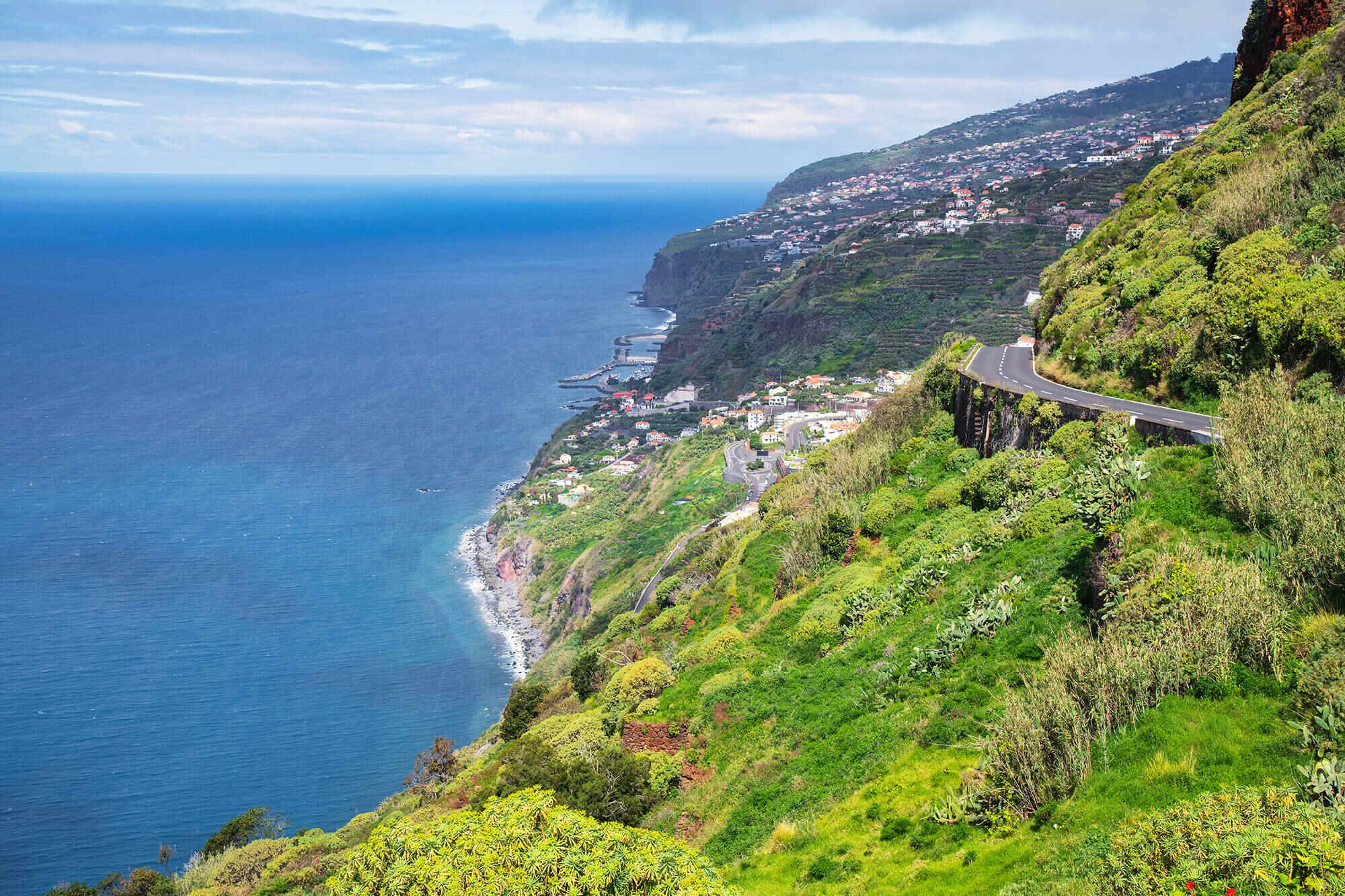
The Madeira Coastline. Photo credit: Robin and Arlene Karpan
Madeira is like nowhere else we’ve travelled.
It’s as if a towering mountain range was plunked in the middle of the ocean, with drop-dead gorgeous scenery at every turn. The best part? It’s easy to experience the island’s highlights of seaside towns, deep valleys, dramatic coastlines, and waterfalls by driving the extensive network of roads and doing a few hikes.
As a road-trip destination, Madeira is unique. The island is only about 55 kilometres long and 22 kilometres wide, which is deceiving because we never travel in a straight line. The road system has around 80 kilometres of tunnels, some up to three kilometres long that slice through the rugged landscape. Beyond the main highways, most roads are narrow, winding, and steep, but take us to breathtaking places.
Please note that this article contains affiliate links. Simply put, this means travelingmitch.com may receive a small commission for some of the recommendations made in this article, at no additional cost to you.
Half the Fun is Just Getting to Madeira
Part of Portugal, Madeira lies in the Atlantic Ocean, slightly closer to the coast of Morocco than to the European mainland.
It’s about a two-hour flight from Lisbon, the most convenient departure point with several daily flights on TAP Air Portugal. Various airlines also have flights from other European cities. Flights directly from North America are limited, one option being Azores Airlines, which stops in the Azores Islands on the way to Madeira.
Landing on Madeira
Whenever we mention that we visited Madeira, a common question we’re asked is, “How was the landing?”
Aircraft landings at Cristiano Ronaldo Airport (named after Madeira’s acclaimed footballer) are not always routine. It’s considered among the most challenging airports in Europe, and pilots have to undergo special training to land here.
With scant level land and mountains next to the sea, there isn’t much room for a runway. The solution? Build part of it on stilts over the ocean. Frequent crosswinds can occasionally be strong enough to cancel or postpone flights. Despite these challenges, the airport has a good safety record, and we had no issues on our flights.
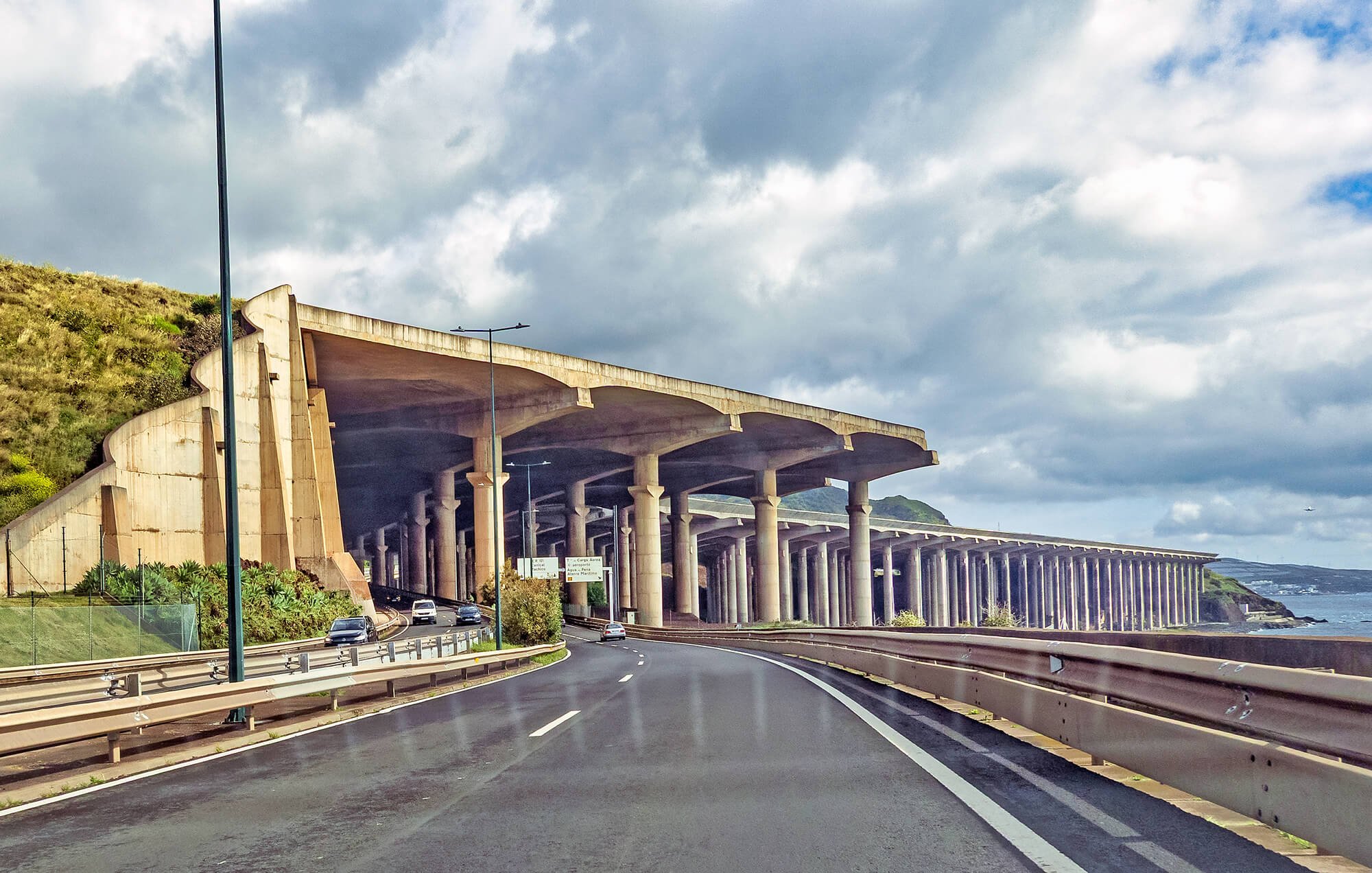
The Airport Runway. Photo credit: Robin and Arlene Karpan
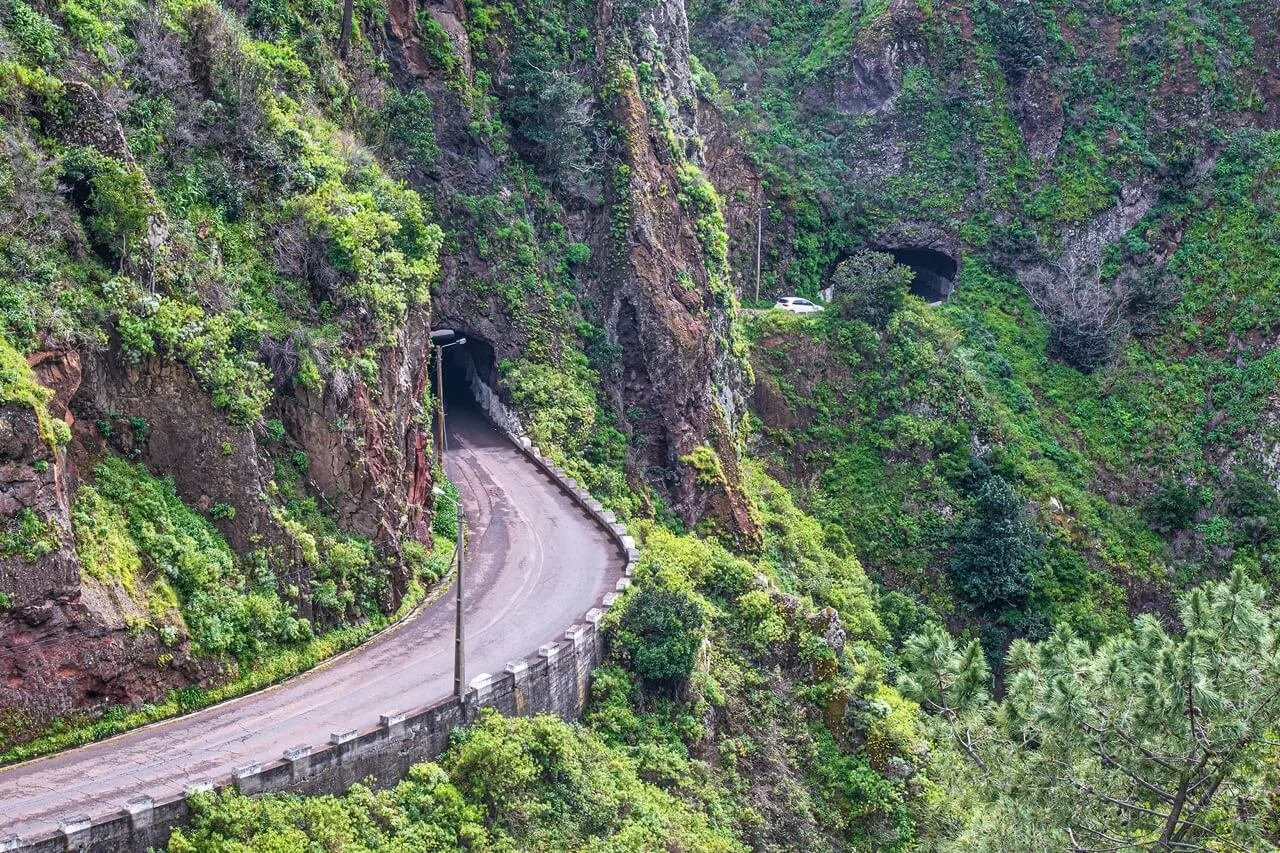
Tunnels abound on Madeira. Photo credit: Robin and Arlene Karpan
When to Go & How to Get Around Madeira
True to its “Island of Eternal Spring” moniker, Madeira’s year-round climate is generally not too hot or too cold. Despite its sub-tropical setting, it can get chilly in the mountains in winter, with occasional snow at higher altitudes. During our early April visit, we had pleasant spring-like weather, with cool evenings and mornings.
Madeira is an immensely popular destination, and even though we were there in an “off season,” it was still fairly busy with a lot of tourists. We would definitely avoid the peak summer season with more crowds and higher prices. Rental cars may also not be available in the summer, unless you book far ahead of time.
Getting Around
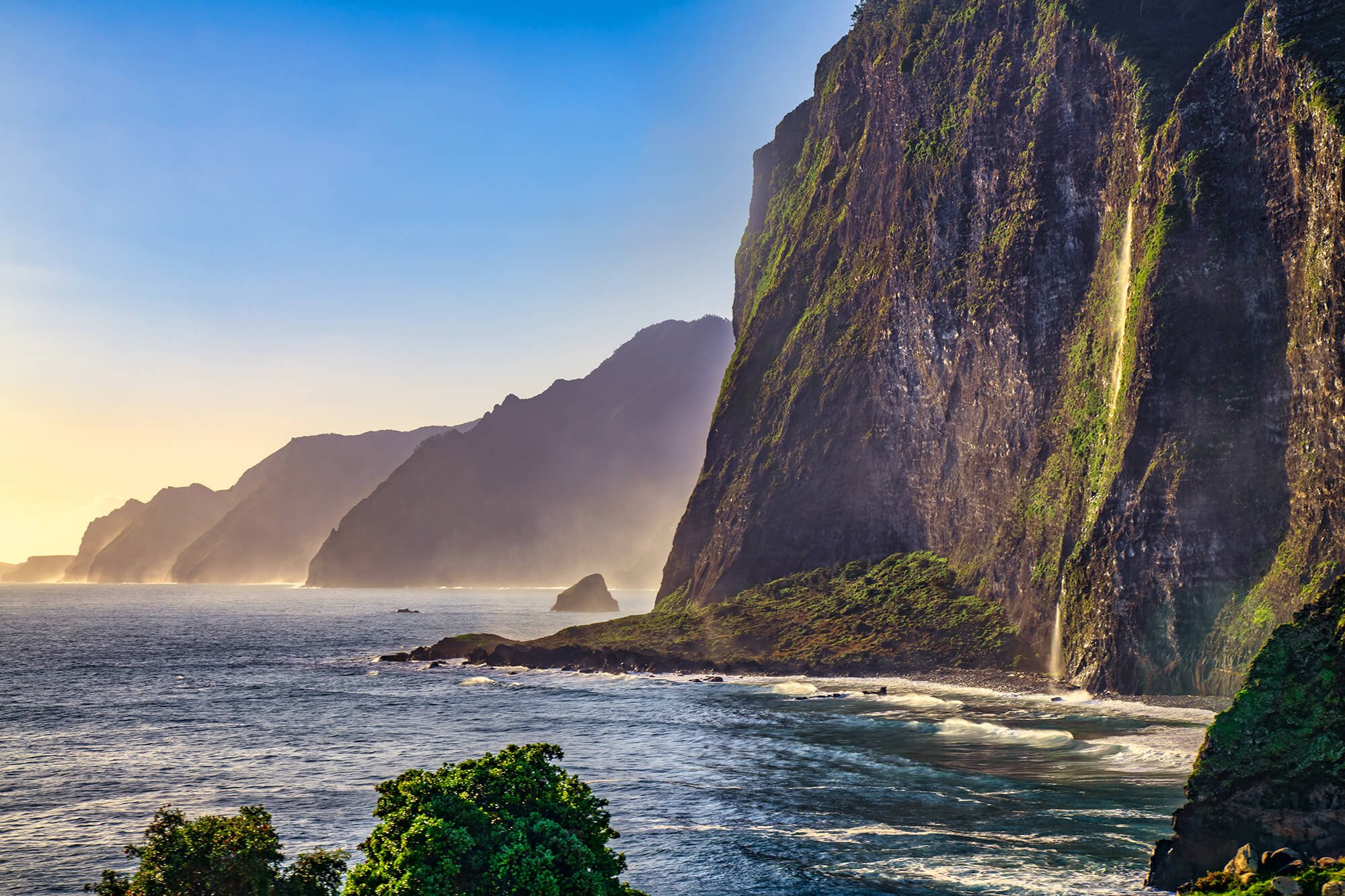
The Northeast Coast. Photo credit: Robin and Arlene Karpan
As you have already guessed by the title, we favour travelling around by car, but road trips are not the only option.
You can take public buses to many parts of the island, although you have to work around schedules and won’t be able to access many of Madeira’s famous and more remote gems. The other option is to book guided excursions with local tour companies, some of which specialize in activities like hiking.
We opted for a rental car because of the freedom and flexibility to come and go as we please. We could tweak our day trips if the weather changed, and could head out early or late to catch a sunrise or sunset. For us, Madeira was less about checking off a list of must-see places (although there were a few of those) and more about discovering what lies around the next corner or over the next hill, which always led to pleasant surprises.
A small car is sufficient, and even desirable for the narrow roads and tight parking spaces, though the tiniest models may struggle up some steep roads. Most familiar car rental companies are based in Madeira, along with a few local operators. Manual transmissions are most common. If you want an automatic, be prepared to pay more and possibly book farther in advance.
We went with a local company, Nunos Car Rental, which gets consistently good reviews and provides full insurance coverage as a standard offering. They also had an off-season discount when we travelled. They brought the car to the airport for our arrival, and on the return, we simply left it in the airport parking lot.
Choosing Your Base: Where to Stay in Madeira
Accommodation is spread throughout the island, sometimes in spectacular settings. Many tourists on short visits pick one hotel for their entire stay, often near the capital city of Funchal on the southeast part of the island. While it is certainly possible to travel to any part of the island on a day trip, it would be time-consuming to visit areas along the west and north coast. Although the island is small, the winding mountain roads are slow-going.
We stayed in two places during our 12-day trip, one near the southeast coast not far from the airport, and the other in a rural area a short drive from the west coast. This worked out well, with shorter drives to explore both the eastern and western sides of the islands.
Two important things to look for in accommodation: whether parking is available (not all places in urban areas offer parking), and how close it is to major roads. There are wonderful places to stay along those winding and remote country roads, but if they are too far away from a main thoroughfare, you will spend a lot of time just going back and forth.
Regions and Places to Visit on Your Madeira Road Trip
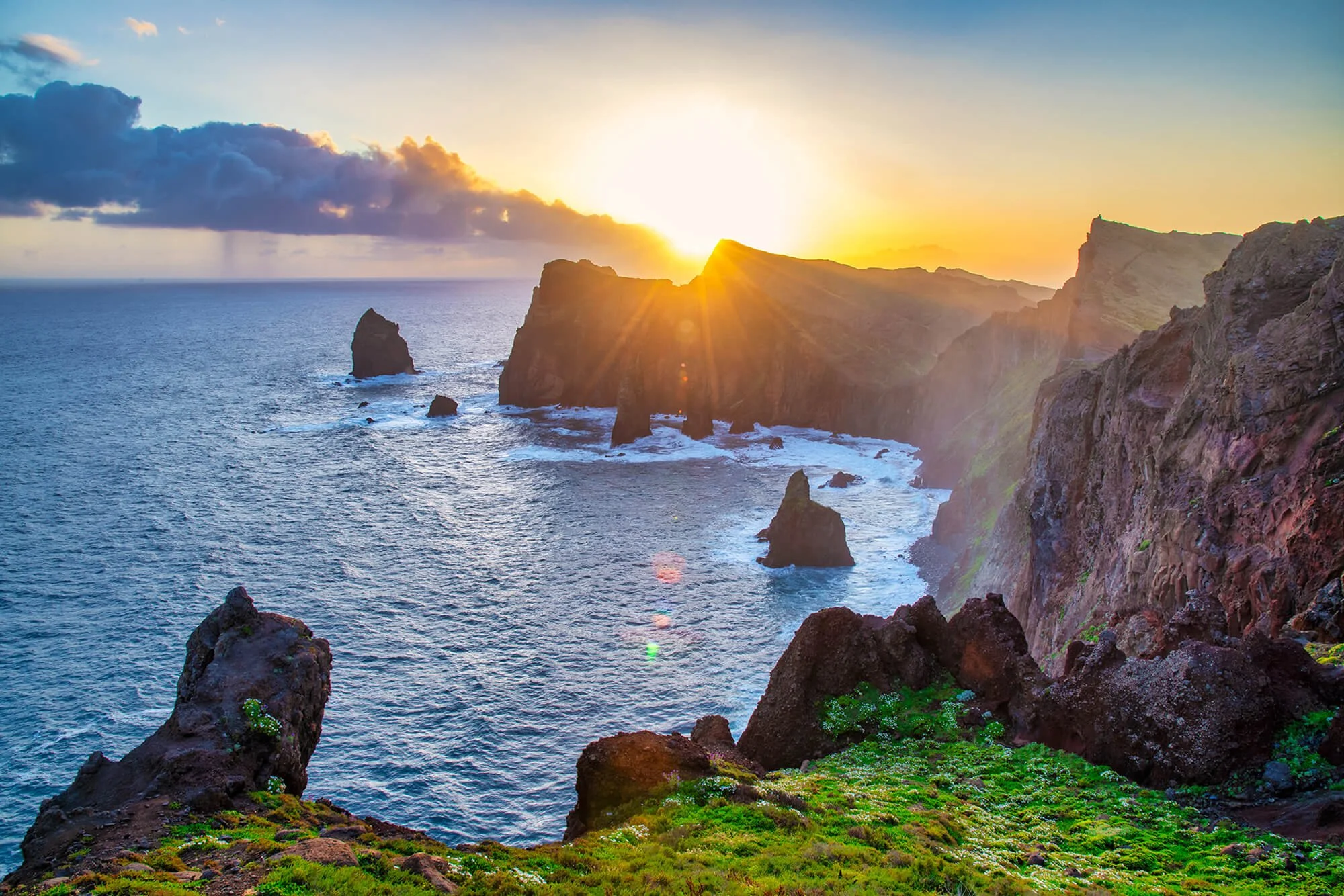
Ponta do Rosto. Photo credit: Robin and Arlene Karpan
Ponta de São Lourenço
A highlight for us was a trip to the eastern tip of the island that juts into the ocean and ends at Ponta de São Lourenço. From the end of the road, a 3-kilometre one-way hiking trail heads towards the point with several spectacular viewpoints along the wild rocky landscape.
This area is the island’s prime sunrise spot. You could catch the sunrise from viewpoints along the hike, although you would have to start walking while it is still fairly dark. A more convenient option is nearby Ponta do Rosto, accessed where the road branches just before the end. Here, you watch the sun come up over the rugged coast and small islands right from the parking area or adjoining hilltops.
If you are staying near Funchal, a convenient trip is to head straight to Ponta do Rosto on the main highway a bit before sunrise, then return slowly while stopping along the way. Marvellous lookouts over the sea are literally everywhere. You could also take in the whale museum in the small town of Canical or the Botanical Gardens closer to Funchal.
A unique feature of the main highway is that it passes underneath the part of the airport runway built on stilts. It’s a strange feeling watching a plane approach while you're driving along, especially when you pass underneath it as it lands.
A spot we enjoyed was Cristo Rei (Christ the King), a 15-metre-high statue of Jesus on a scenic point that juts into the sea on the south coast. Besides having historic significance, it overlooks the bay at Funchal, which would also be great for both sunrise and sunset.
SEEING THE Northeast coast and Pico Ruivo
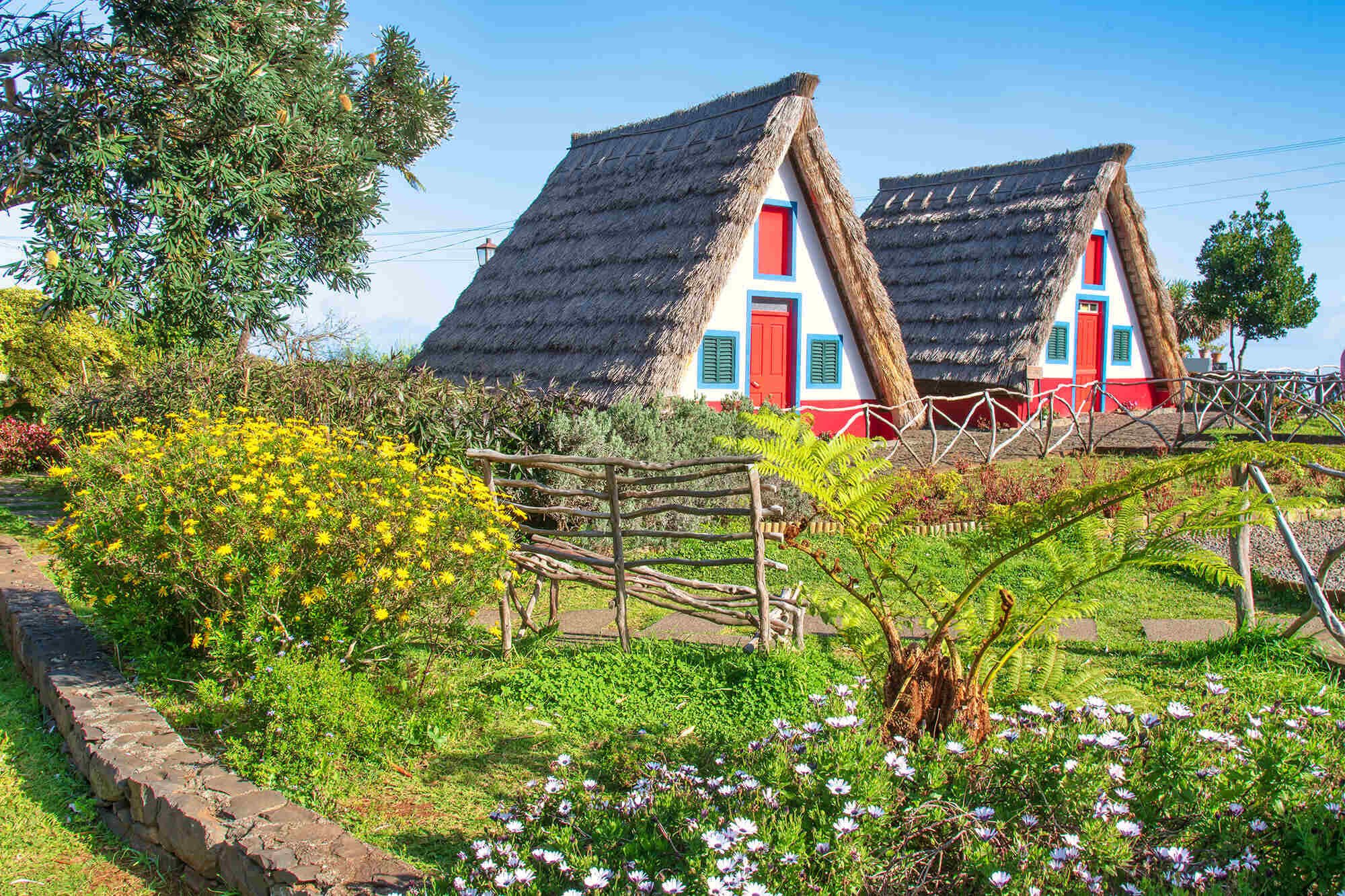
Santana. Photo credit: Robin and Arlene Karpan
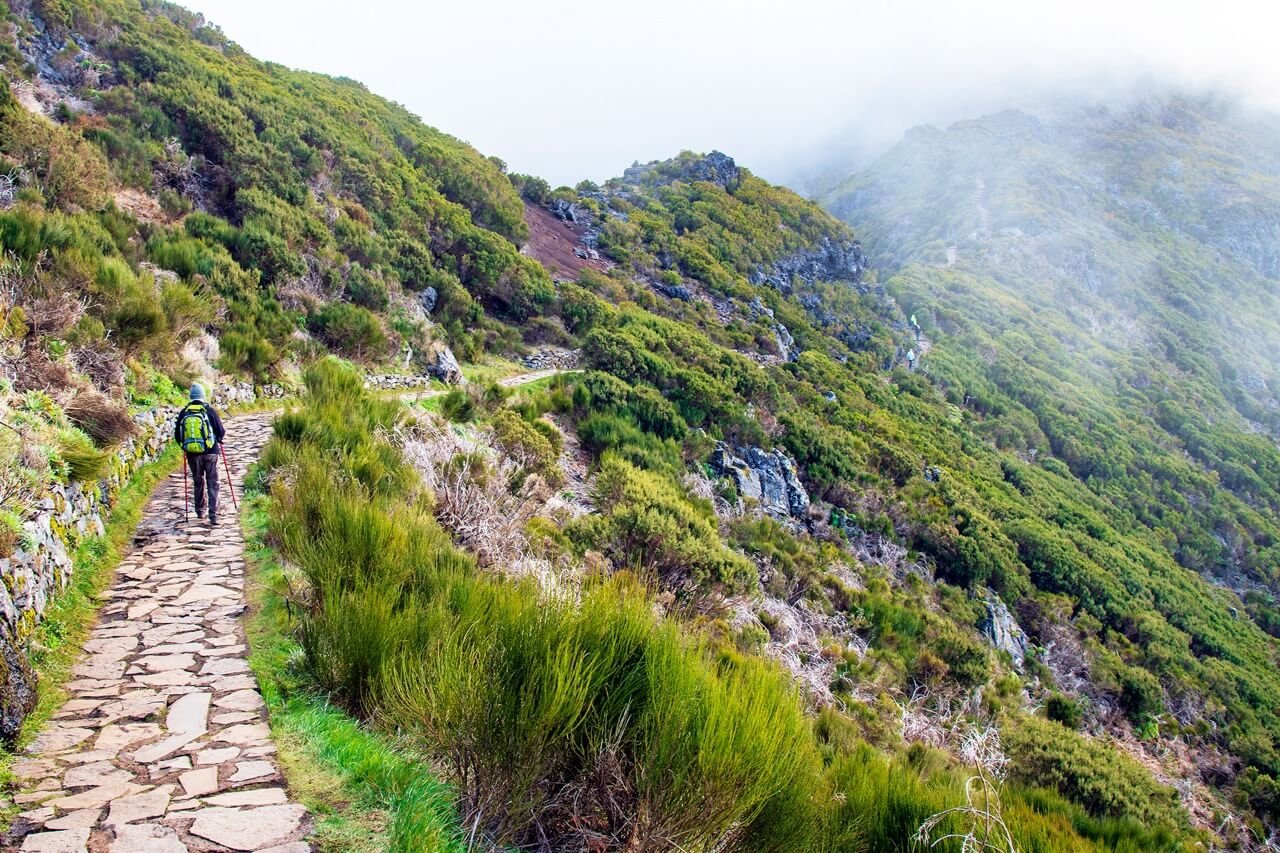
Pico Ruivo hike. Photo credit: Robin and Arlene Karpan
To get to the northeast coast, we take the same highway but keep going north instead of turning off to Ponta de São Lourenço. It’s a fairly fast major highway, including long stretches of tunnels. Depending on how much time you have, we suggest taking alternative minor roads in the area, which offer amazing scenery, especially around the picturesque town of Faial.
The town of Santana, in addition to being in the midst of spectacular landscapes, is famous for its traditional A-frame houses, which were once common to the region when it was isolated from the rest of the island. A few are restored and displayed as a tourist attraction.
Santana is the departure point for the island’s highest peak, Pico Ruivo, at 1862 metres. A road winds up and up to a parking lot and a trailhead for the 3-kilometre hike to the top. Despite the altitude, we’re still remarkably close to the sea. It’s a relatively easy, though steep, trail with sweeping views. The summit offers an amazing 360-degree panorama – or so we’re told. Heavy fog rolled in during our walk, and as we neared the top, we could barely see a few metres ahead.
Pico Ruivo is also one end of Madeira’s most famous walk—the vertigo-inducing Peak to Peak Hike between here and Pico Arieiro. Unfortunately, the trail was closed for well over a year, including during our visit, due to extensive forest fire damage. The good news is that reconstruction is mostly done, with a tentative reopening scheduled for late April 2026.
ENJOYING The central interior of Madeira
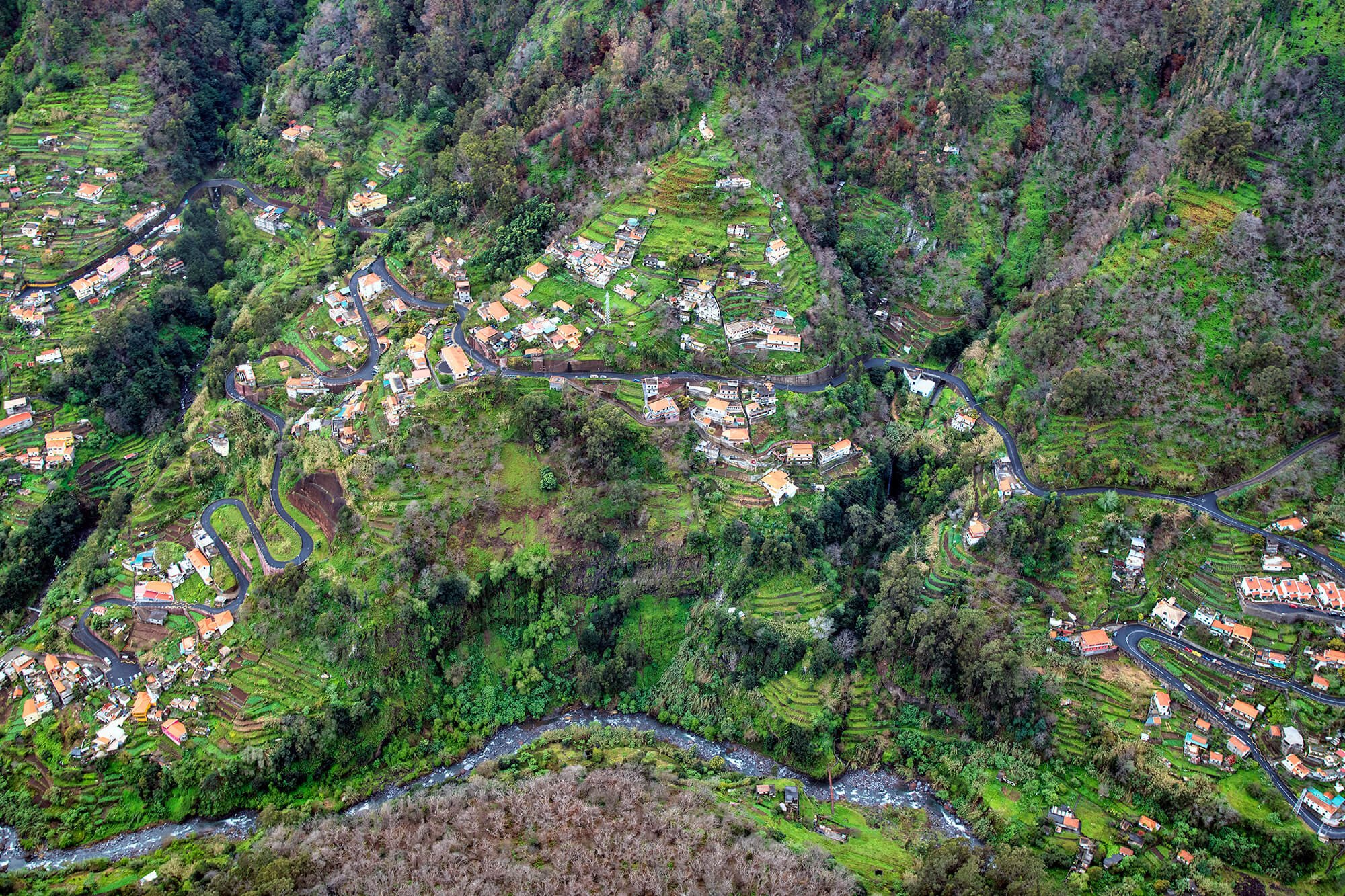
Nuns Valley. Photo credit: Robin and Arlene Karpan
The mountainous centre of the island has so much to offer that it’s difficult to pick and choose. Despite the Peak-to-Peak Hike being closed, Pico Arieiro still provides outstanding views and access to other nearby hikes. However, once again, thick fog thwarted our visit to Pico Arieiro.
An area that especially impressed us was Nuns Valley, deep in a wild volcanic depression northwest of Funchal. The tiny isolated community was founded in the 16th century when a religious order of nuns moved here to escape pirate attacks on the coast.
After a long, constantly twisting drive, we reach a viewpoint where we look about a kilometre straight down to what appears to be a toy village. Photos may look as if they were taken with a drone or from an aircraft, but they were taken from a cliff-edge observation deck. Getting down to the village is fairly quick since the road enters a tunnel that descends sharply into the valley.
HEADING TO Madeira's South Shore
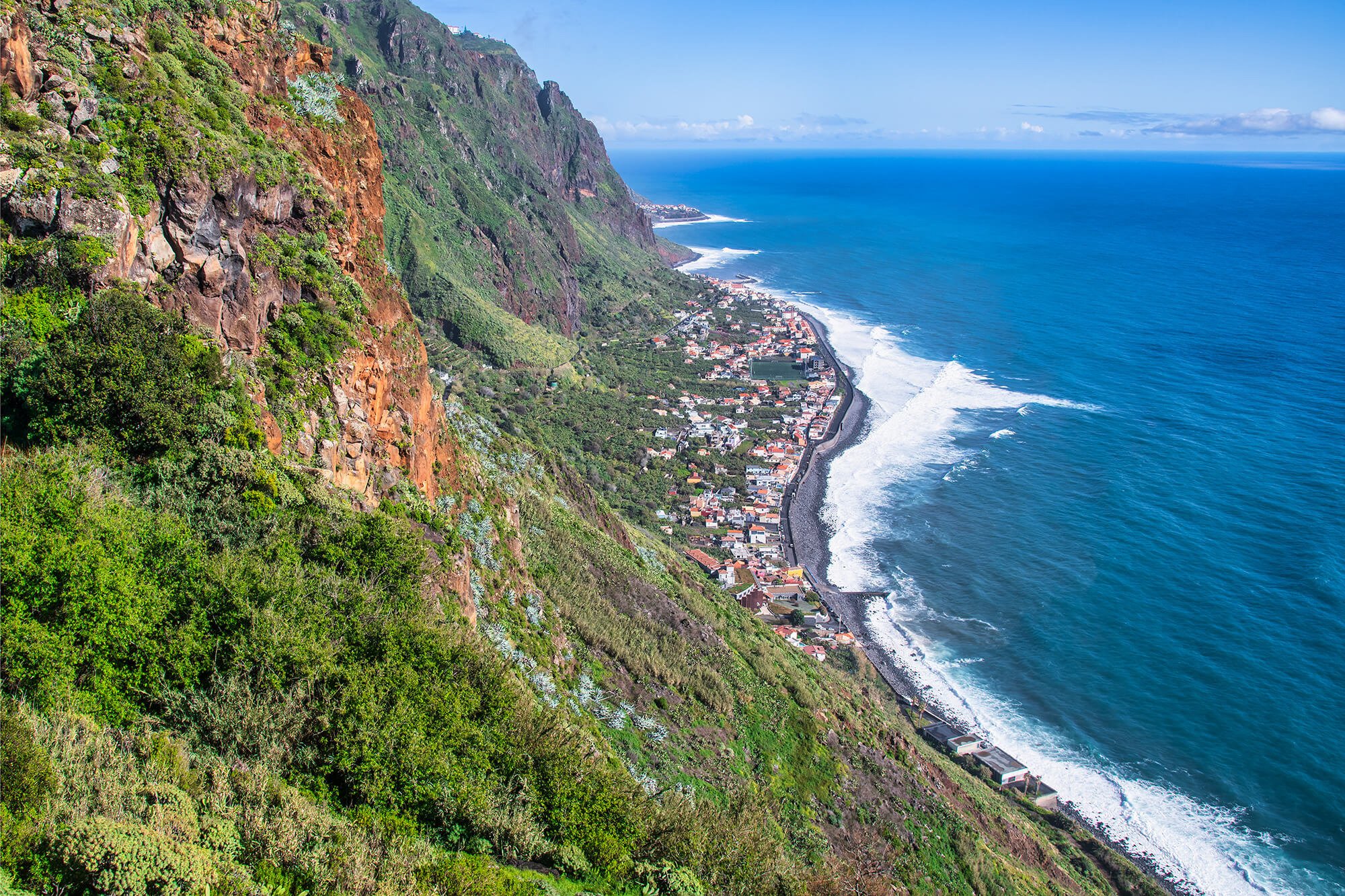
Paul do Mar. Photo credit: Robin and Arlene Karpan
A fast highway parallels most of the south shore from Funchal to the west coast. But to see the good stuff, you have to take some minor roads closer to the sea. Possibilities for stops along the way are almost endless.
Cabo Girão has the highest cliff in Europe—a 580-metre vertical drop. Nearby is the Rancho Cable Car, which you can take to the bottom. It’s considered one of the steepest cable cars in Europe.
Ponta do Sol, heralded as the sunniest place on the island, has a picture-perfect village and an inviting beach. Since it’s so popular, parking can be an issue.
Also known for its beaches, Madalena do Mar is home to an unusual short hike that takes you through banana plantations, the main agricultural crop in Madeira. For such a mountainous place, the island has a lot of agricultural land, almost all of it in small plots terraced into the sides of steep hills.
Don’t miss the small community of Paul do Mar with its spectacular setting, sandwiched on a narrow piece of land between the sea and a massive cliff face.
ENJOYING Madeira’s west and northwest coast
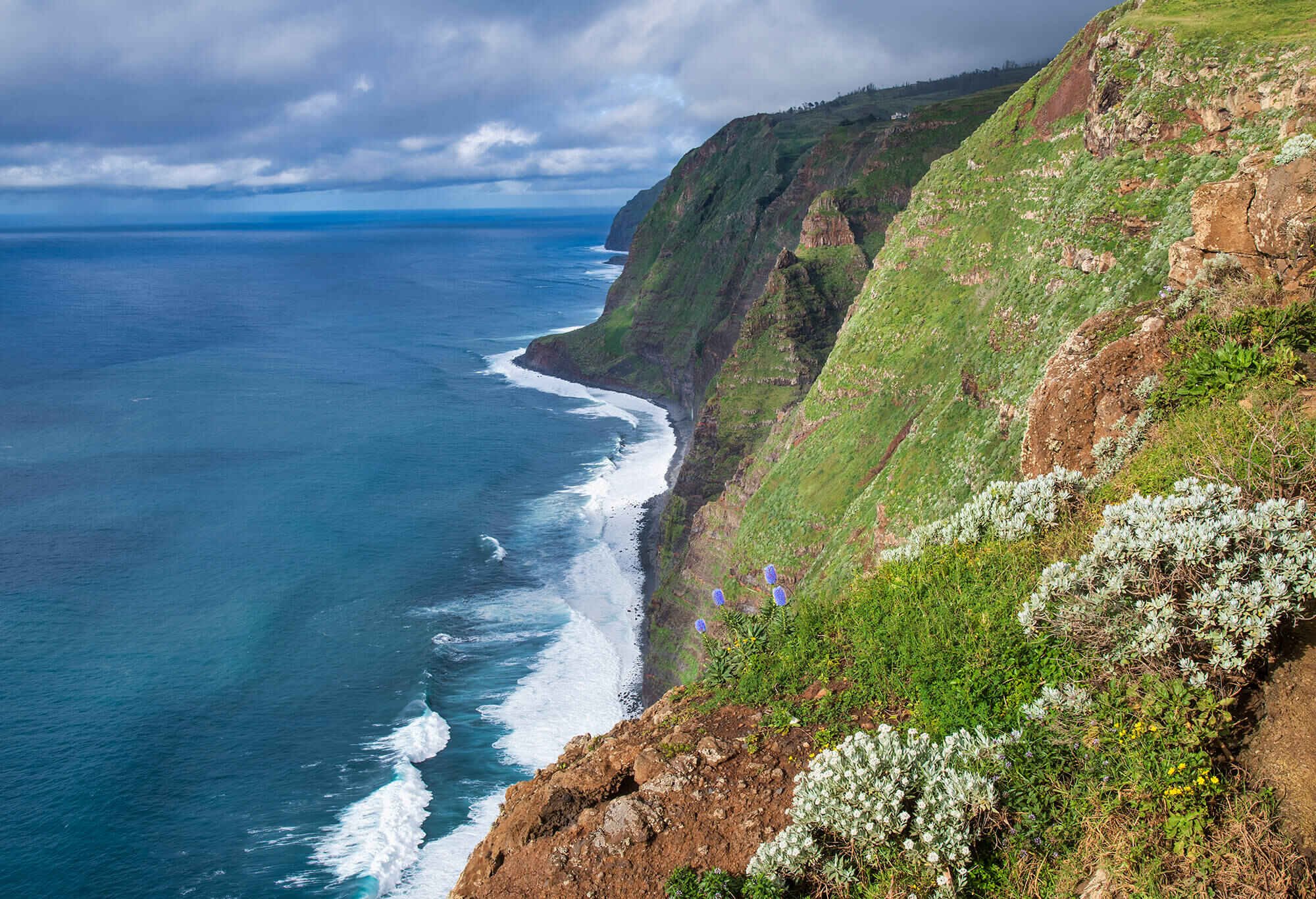
The West Coast. Photo credit: Robin and Arlene Karpan
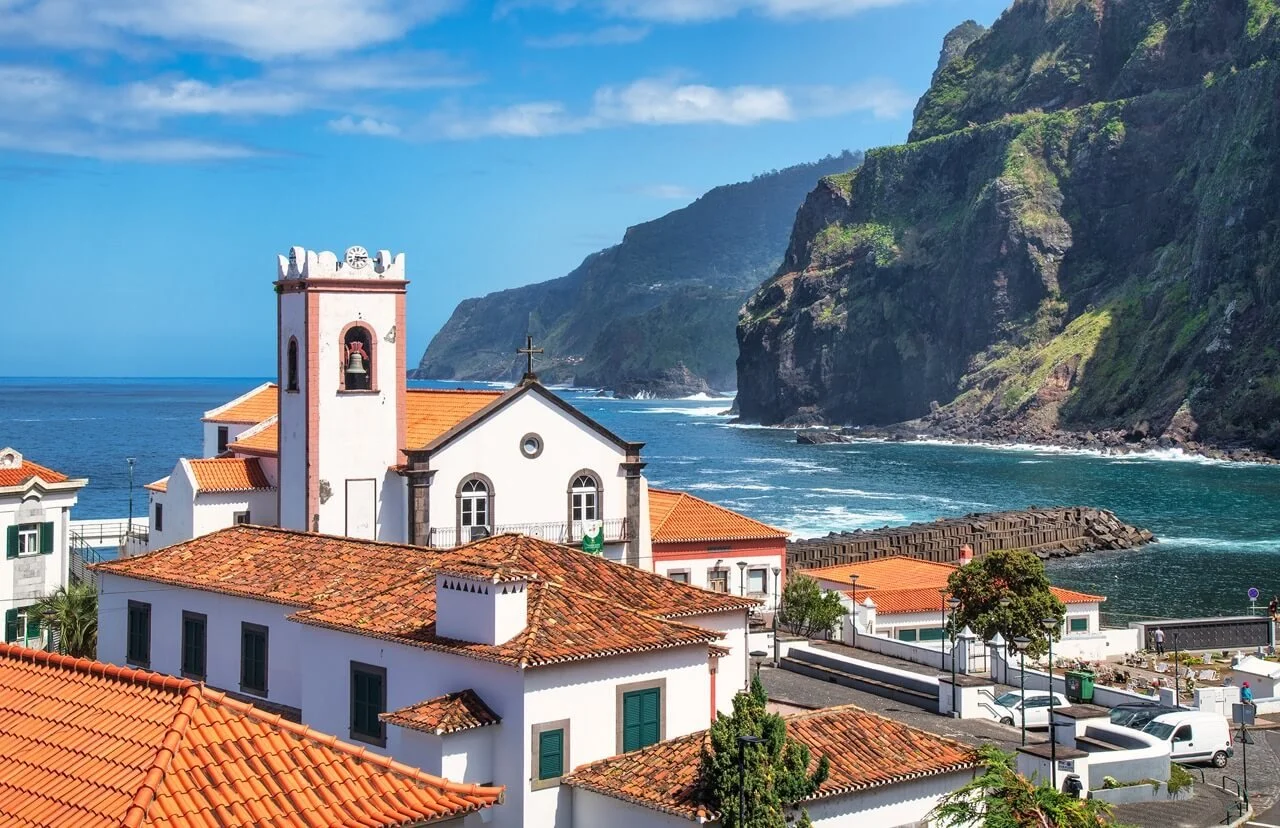
Village on the North Coast. Photo credit: Robin and Arlene Karpan
Ponta do Pargo marks the western tip of the island. The viewpoint from the lighthouse grounds sits atop a cliff almost 300 metres high, and as far as we can see to the north, massive cliffs rise straight up from the water’s edge.
From here, the road north runs slightly inland, with a number of side roads to lookout points. At Achadas da Cruz, we can take yet another cable car that seems almost vertical.
Porto Moniz, at the northwestern tip of the island, is famous for its natural swimming pools. The sea on the rugged shore can be rough, but the constantly circulating seawater stays much calmer in pools eroded into the rocks.
Heading east along the north coast, we soon come to Ribeira da Janela, a tiny community at the mouth of a river, and surrounded by steep slopes. Just offshore from the stony beach stand a number of striking sea stack formations that break the powerful tidal swells with clouds of spray.
Nearby Seixel also has natural pools in the rocks, as well as a popular black sand beach. We can keep heading east along the coast, past other small villages and countless scenic views, eventually circling the island.
Fanal Forest
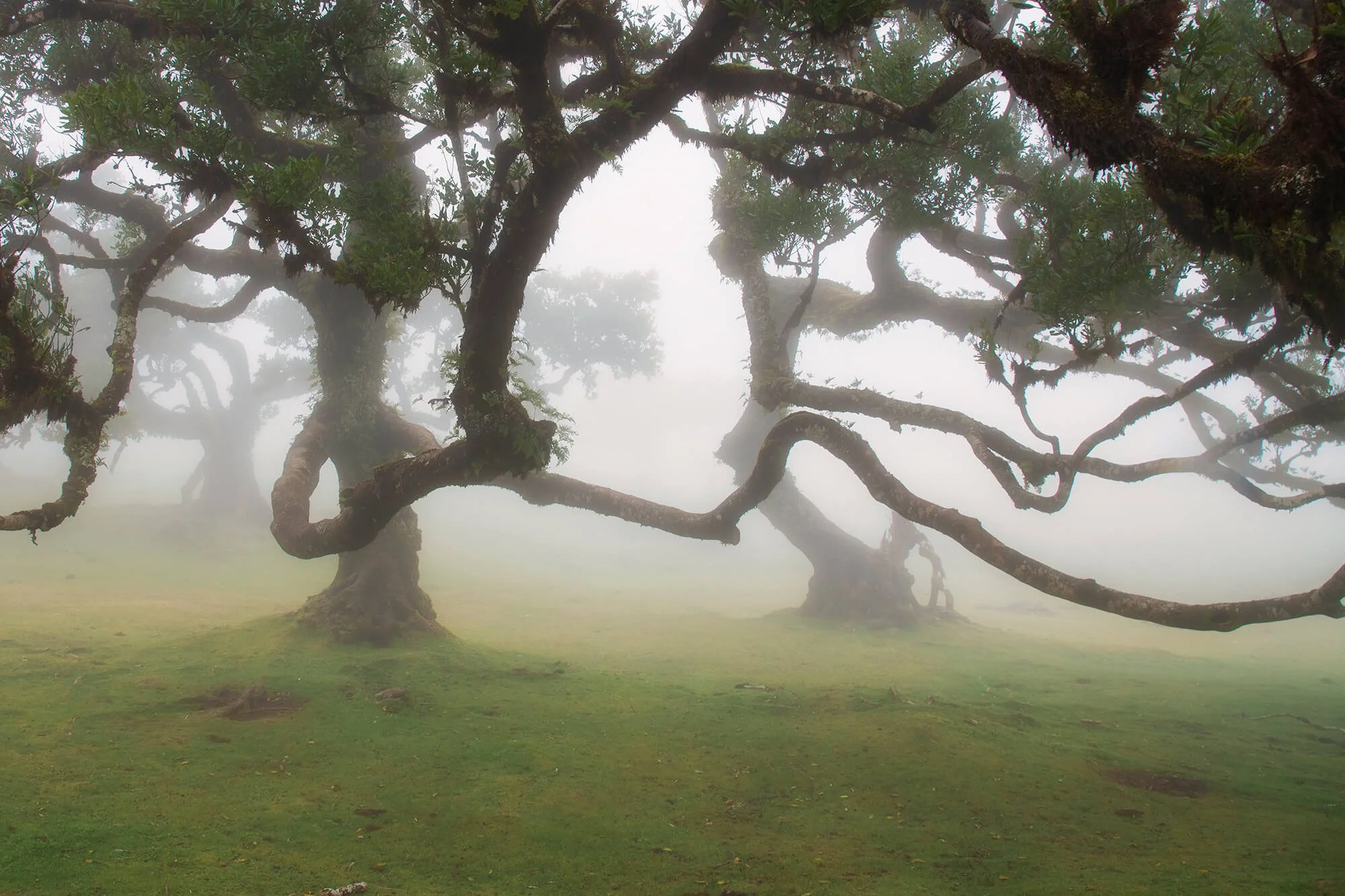
Fanal Forest. Photo credit: Robin and Arlene Karpan
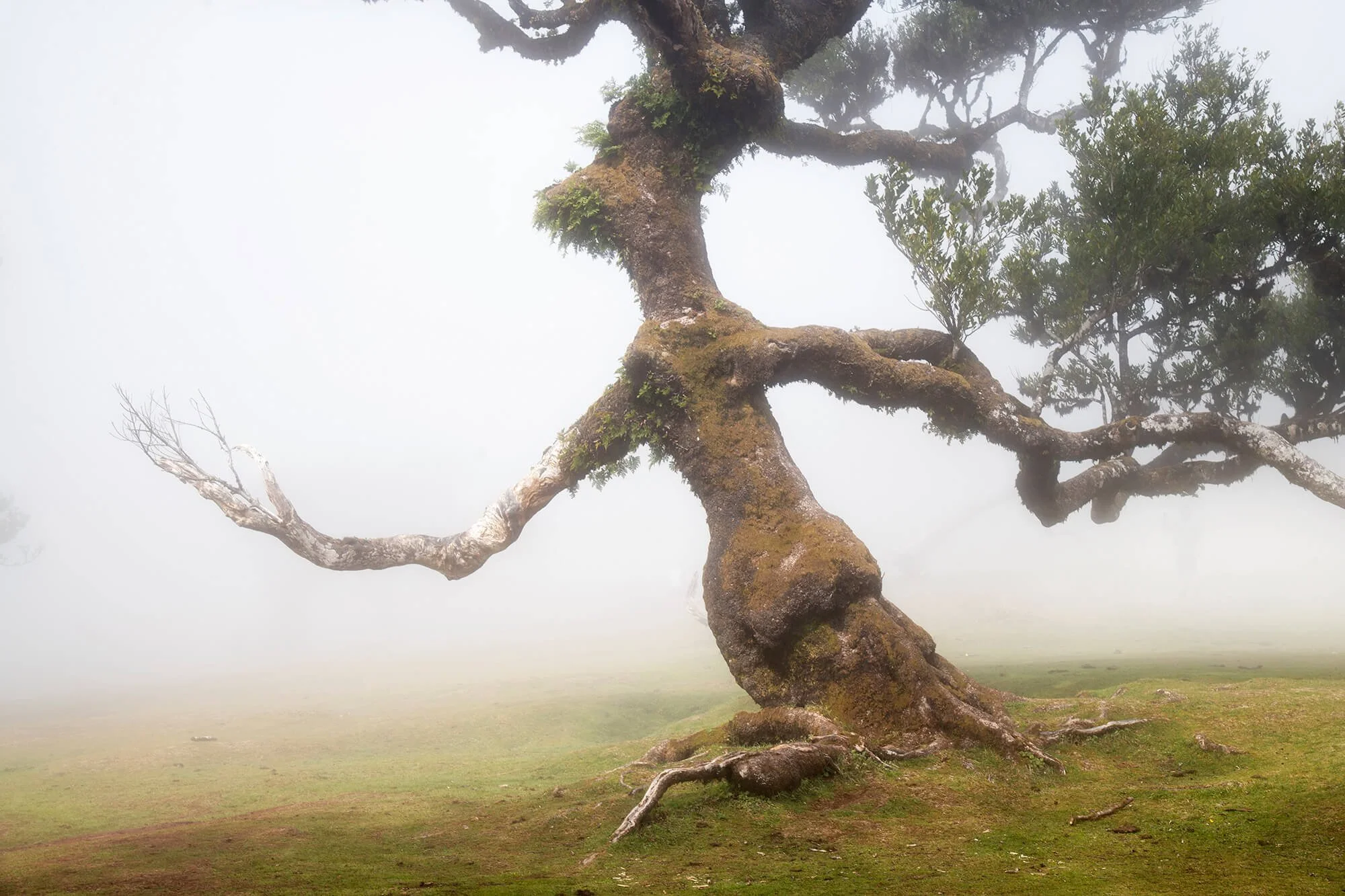
The Witch. Photo credit: Robin and Arlene Karpan
We left the best for last. If we had to pick one favourite place in Madeira, this would be it. The Fanal forest is part of the Laurisilva of Madeira UNESCO World Heritage Site, the best preserved laurel forest in the world.
You can get here from either the south or the north coast. The most dramatic approach is from Ribeira da Janela, where the road immediately starts climbing a series of switchbacks with outstanding views. We eventually reach a high plateau where the land is reasonably level and the roads fairly straight by Madeira standards.
These ancient trees, some thought to be over 800 years old, have moss-covered limbs, gnarly trunks, and gangly branches, like something in a spooky movie. But what’s a spooky scene without fog? While fog sometimes thwarted our explorations in other parts of the island, here we want fog. The forest is still attractive in sunlight, but when the fog rolls in, it magically transforms into an enchanted wonderland straight out of a fairytale.
While each tree takes on its own character in the fog, the star of the show is “the witch,” as she seems to beckon visitors with her outstretched arm.
Final Thoughts on Our One Week Madeira Itinerary
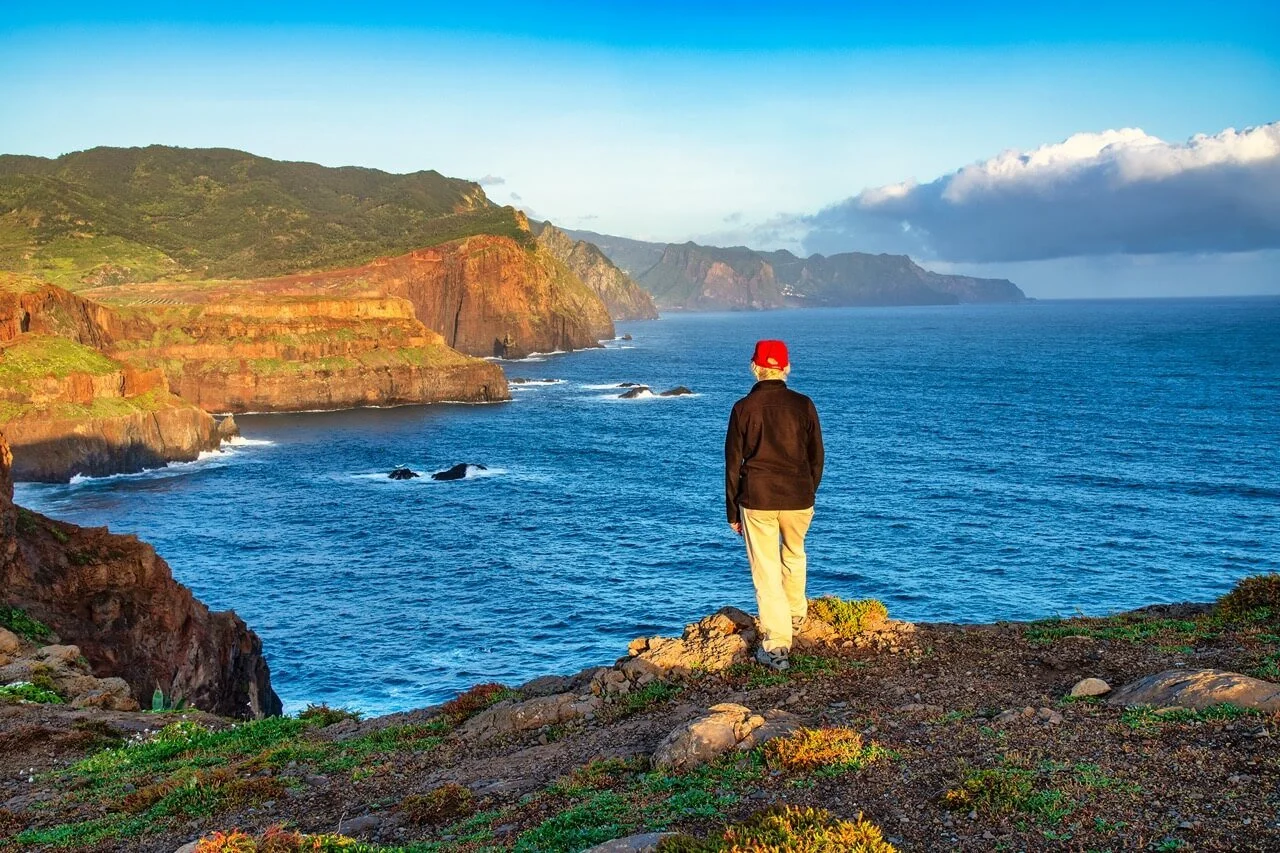
Arlene on the Northeast Coast. Photo Credit: Robin and Arlene Karpan
This is an overview of the main things you could get to in seven days. But much more is possible if you have the time. We would consider a week to be the absolute minimum for a visit, while two weeks or even more would be preferable.
The most important lesson we came to learn was the need to be flexible. Weather patterns can vary throughout the island. Make use of the webcams showing different parts of the island to see what is happening. A landslide or traffic accident on a narrow road could suddenly make a route impassible, as we found out one day and had to go to Plan B.
Above all, this is a great place to get off the beaten path and explore. Some of our favourite places were ones that we happened on by taking the road less travelled.

Robin and Arlene Karpan
Robin and Arlene Karpan are award-winning writers, photographers, bloggers, and authors of several bestselling travel books. Their work has appeared in over 100 publications around the world. Robin and Arlene’s travels have taken them to all seven continents, where they have a special interest in the natural world and outdoor photography. Robin and Arlene publish the popular travel blog Photo Journeys, which looks at travel through a photographer’s lens, and is rated by Feedspot as among the Top 100 Travel Photography Sites.