
Why the Trans Canada Trail Matters to Us — And Should to You, Too
Welcome to Canada’s National Trail. At its core, the Trans Canada Trail is all about protecting what connects us, coast to coast. If we support the Trans Canada Trail, and all that it stands for, the reality is that it supports Canadians right back, in a myriad of ways.
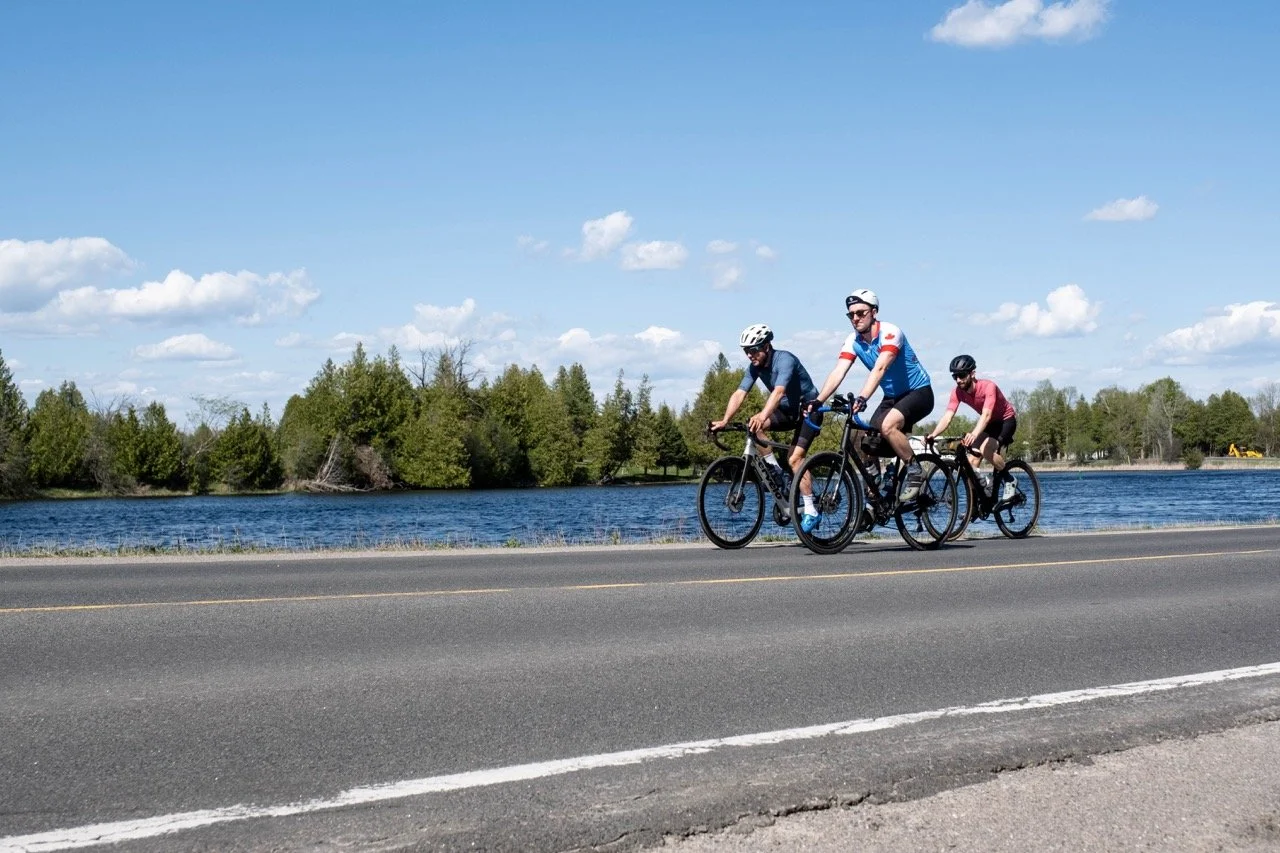
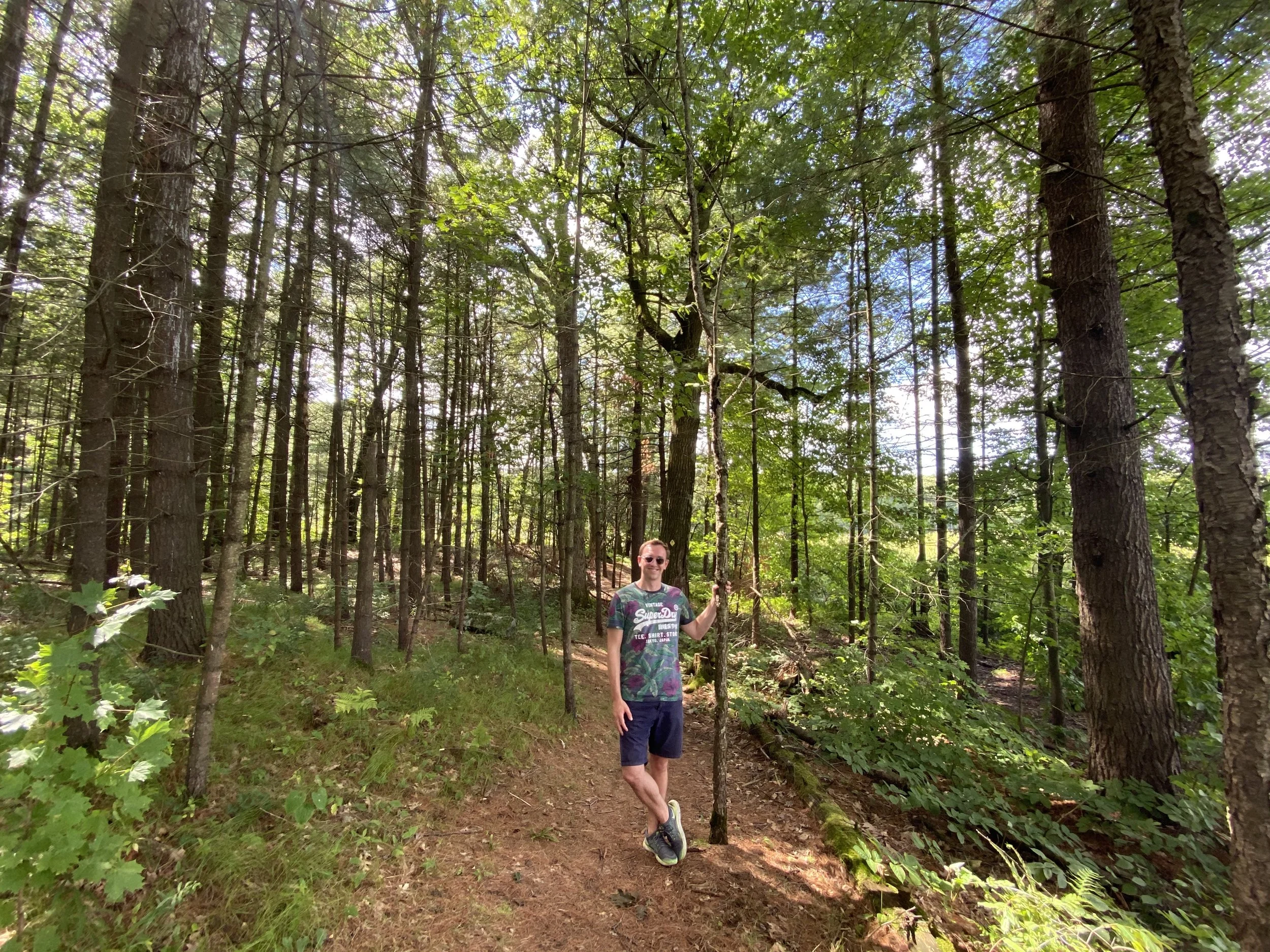
Appreciating the Trans Canada Trail near Peterborough, Ontario. Photo Credit: Justin Ross
The Trans Canada Trail, or Sentier Transcanadien, as it’s called, is the longest multi-use trail system in the world, and thanks to the commitment of the organization, which is a registered charity, I might add, the trail and its impact, are always growing.
It has reached every single province and territory in Canada, and connects all three of Canada’s coastlines. While this may sound like an impossibly large project at first, its managed locally, which means that each part of the trail can be connected to (and supports) the communities around them.
The goal of the Trans Canada Trail is something that feels as if its in the lifeblood of what it means to be Canadian — to encourage the people that call this nation home to embrace and protect the outdoors, and to use the outdoors to connect with one another more meaningfully, and to honour the restorative power of nature.
You could argue that a gentle nod to a passerby on a trail, without a single word shared, is more powerful than the myriad of emails we’re asked to reply and respond to each day. Funny enough, though, you need to experience that to understand it.
In literal terms, we can see the value of a trail that connects the nation. But I’d argue that the symbolism, metaphorically, is just as, if not more, profound. If social media is the online arena where it can feel as if we’re all on different sides of the fence, perhaps it’s a physical trail like this that reminds us that when it comes to land stewardship for future generations, we’re all in this together.
We’re forced to think bigger, and to see value in planting seeds and watering soil, for others — our fellow trail users, our fellow Canadians.
There’s No Right or Wrong Way to Use the TCT - It’s for Everyone
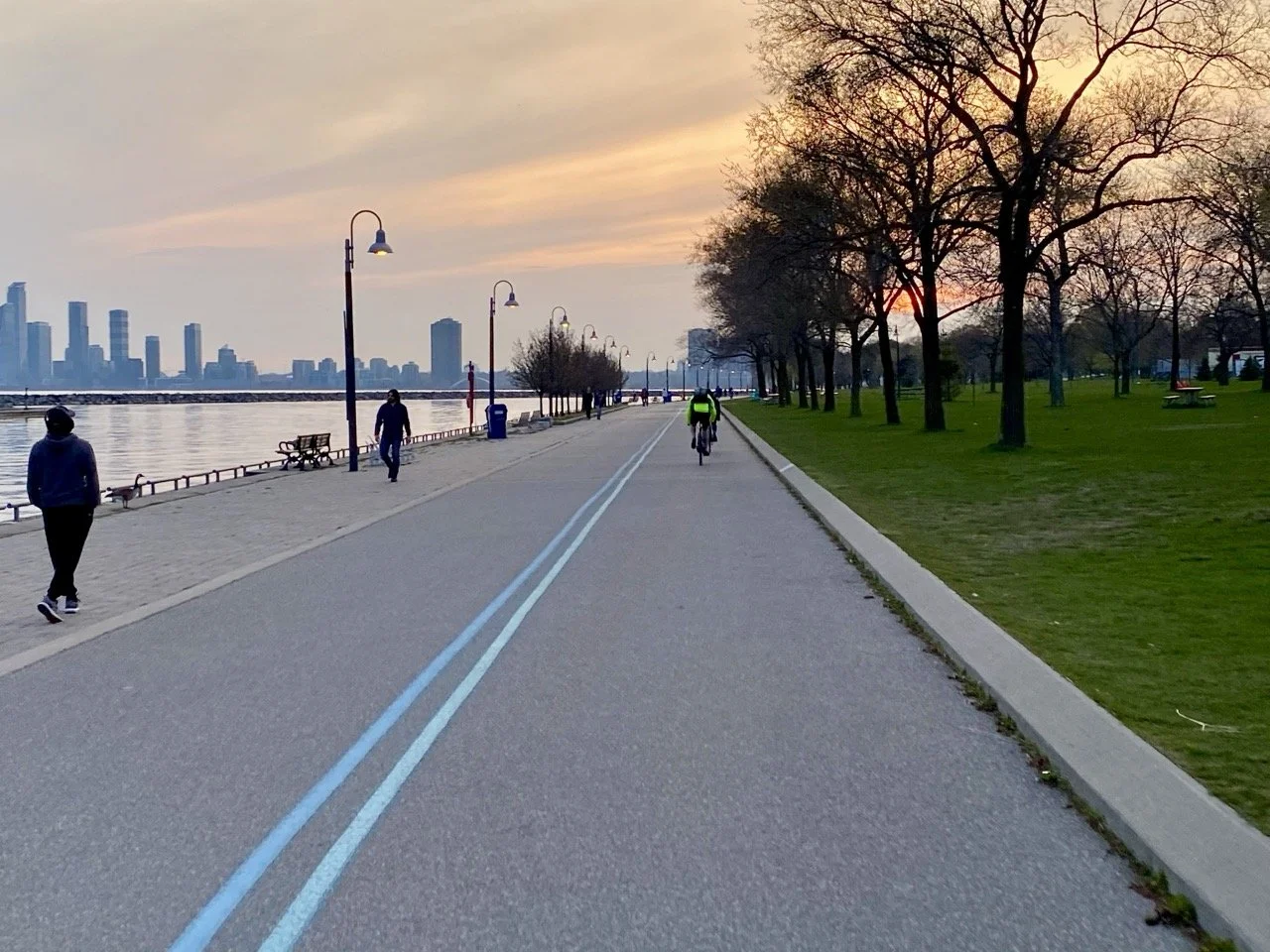
A sunset ride on the Waterfront Trail. Photo Credit: Christopher Mitchell
One mistake people make is thinking that to take the Trans Canada Trail is to plan a cross country adventure, but the reality is that, you should start by exploring the TCT map, and seeing what you have access to around you.
Now, I’m not saying you shouldn’t dream big. I’ve been fortunate to hike, walk, cycle, paddle and mountain bike well over 1000 kms of this trail, but starting small, and with intention never hurts. I started by looking at how I could replace some of my most common and repeated drives with TCT adventures.
For example, Bri and I found ourselves heading to Oakville quite a bit from Toronto to visit our nephews. Well, it turns out that I could jet down to the lakefront in Toronto, and cycle pretty much the entire way to Oakville (give or take 50 kilometres) on the Waterfront Trail (Martin Goodman - Etobicoke - Mississauga - Oakville). Nowadays, I can tackle that ride in give or take two hours, and on a beautiful day, after a busy week, that may end up being my favourite 2 hours of the whole weekend (until I get to see my nephews, of course, who love to see me arrive in my full cycling attire).
Perhaps the daily commute that tends to take some of your energy because of traffic can be turned into a net positive by taking the TCT. You can walk or cycle in the warmer months, and take up snowshoeing or cross-country skiing in the colder months. Naturally, what you can do will depend on where you’re located, but if you haven’t, why not look at what’s around you?
I’d recommend the “Find and Filter Trails” section of the map, where you can support by activity. There’s also paddling aplenty, and it’s marked where you can do some horseback riding, mountain bike, ski, and more.
The point is that it’s not really about what you’re doing on the Trans Canada Trail. It’s not a competition. It’s about understanding that the trail is there for you, however you’d like to use it.
The Trans Canada Trail is also very much focused on accessibility and inclusion, noting that “by learning from the lived experience of people who face barriers to outdoor recreation and supporting local projects that make trails safer and more welcoming, we can work together to help communities across Canada create trails for everyone.”
You can find tools and resources here, and it all falls under their “Trails for All” narrative, to ensure the mapping and educational resources have all Canadians in mind, while adding support for adaptive trail activities and equipment.
It’s Year Round
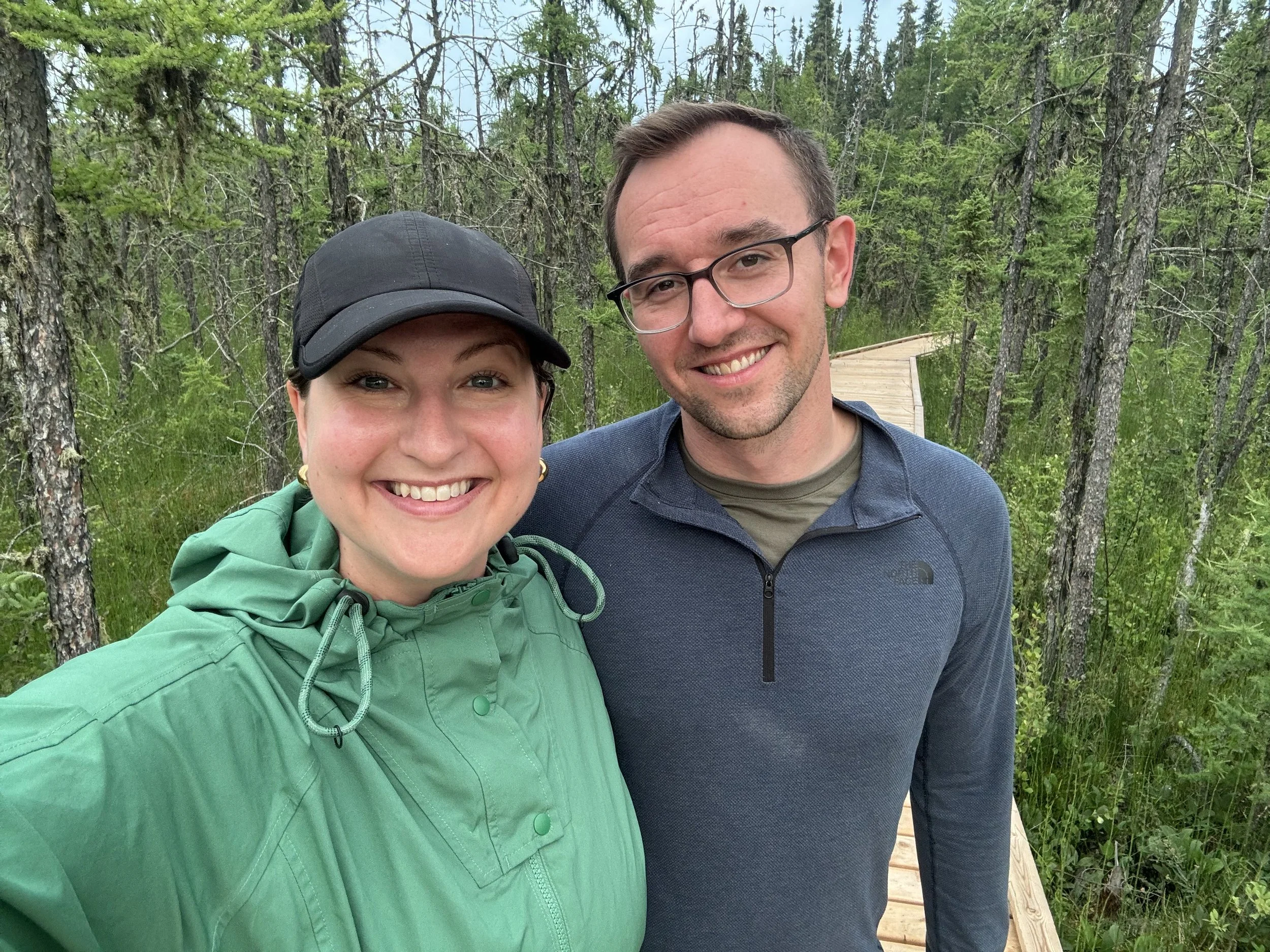
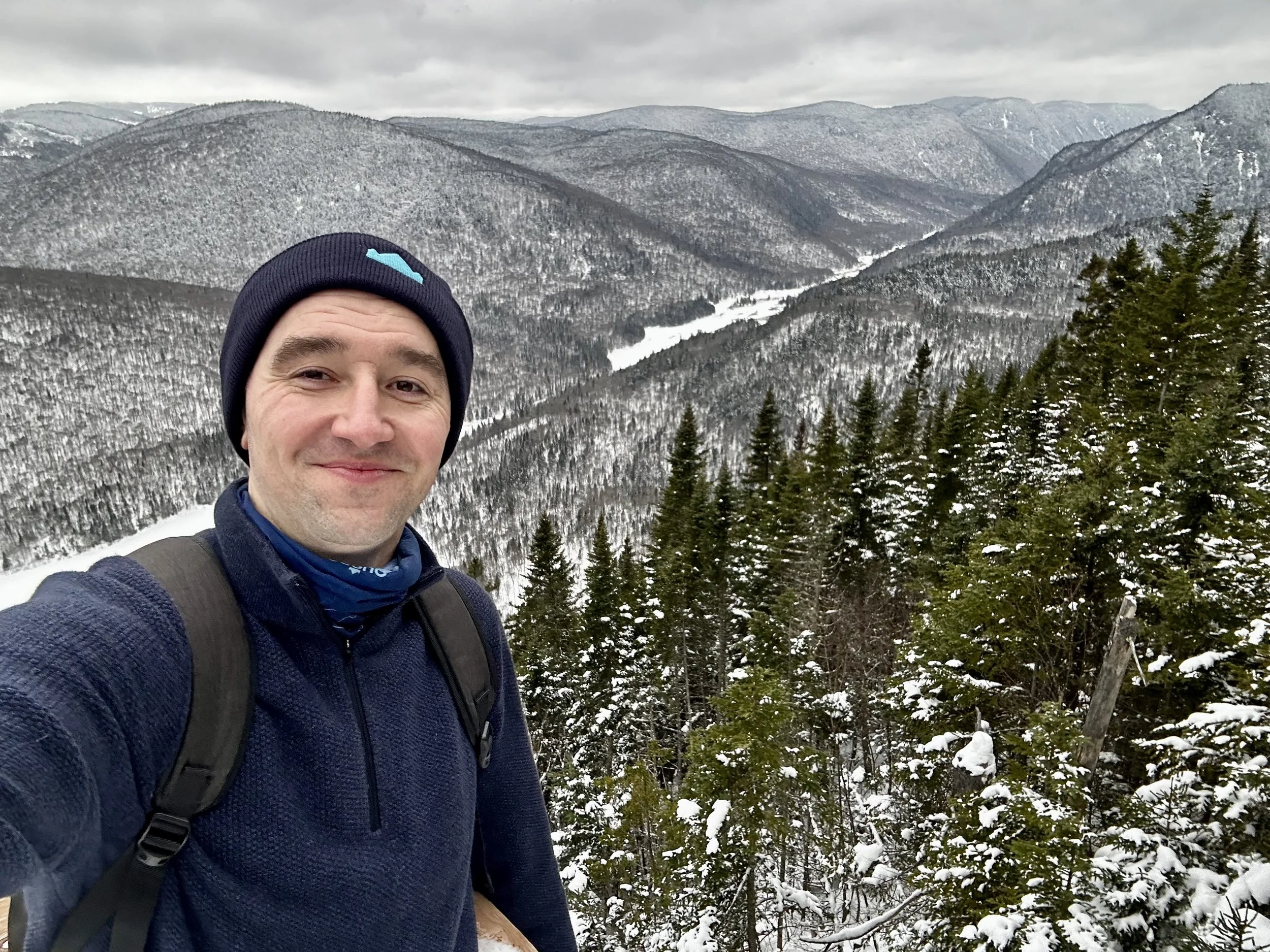
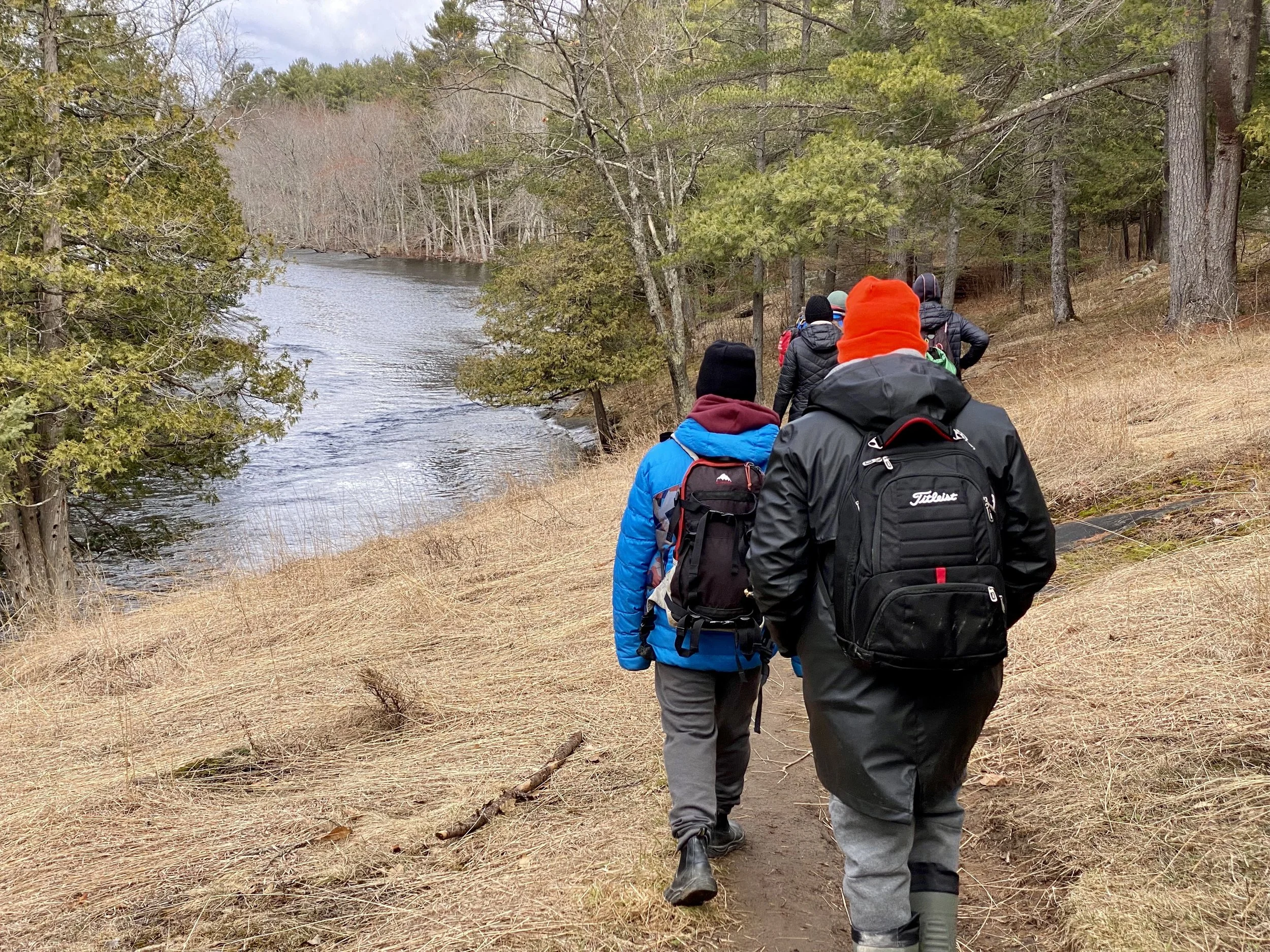
The Trans Canada Trail is a four season, multi-use trail system, and that’s the way it’s got to be in a nation like Canada.
Of course, since they’re locally managed areas, and it’s a big trail, you do want to be mindful of the exact conditions that day, especially in winter in terms of ensuring the trail has been groomed, but the ethos of this being accessible to you year round is firmly embedded (though it’s wise to check conditions with your local trail group).
I remember studying for a semester abroad in Oslo, and seeing the tram system filled with people with their cross-country skis after work. You’d see three year olds on downhill skiis on the weekend, and eighty year olds with cross country skiis on any given day, and it was just a beautiful thing.
It all came down to an ideology that us Canadians share with the Norwegians — “there’s no such thing as bad weather, just bad clothing.” Or, as I like to say, “In the end, memories don’t get cold.”
Inside the comfort of our homes, it can be easy to make a trip outside feel, well, bigger than it has to be. And yet, when we do prioritize time outside, regardless of weather, it’s often that we come back to our homes in a better place, both physically and mentally.
Funny enough, back in 2010, in my Oslo days, I was not fully aware of all the TCT offered, despite the fact that it was founded all the way back in 1992. But that’s a common tale, and I want to tell you that it’s never too late for your adventure or appreciation for the Trans Canada Trail to begin.
I don’t think it was until I left Canada that I fully realized all that we had here to cherish and protect, from a nature perspective and from a cultural perspective. As Marcel Proust said, “the real voyage of discovery consists not in seeking new landscapes but in having new eyes."
I decided to set those new eyes on the Trans Canada Trail. And before I knew it, I was soaking in the rays on the Guelph to Goderich Rail Trail in the warmer months, taking in the fall landscapes from the Meewasin Trail in Saskatoon, and fat-biking in historic Québec City in winter.
The season is never an excuse. In fact, it’s an opportunity.
It Offers Peace and reprieve in a busy world
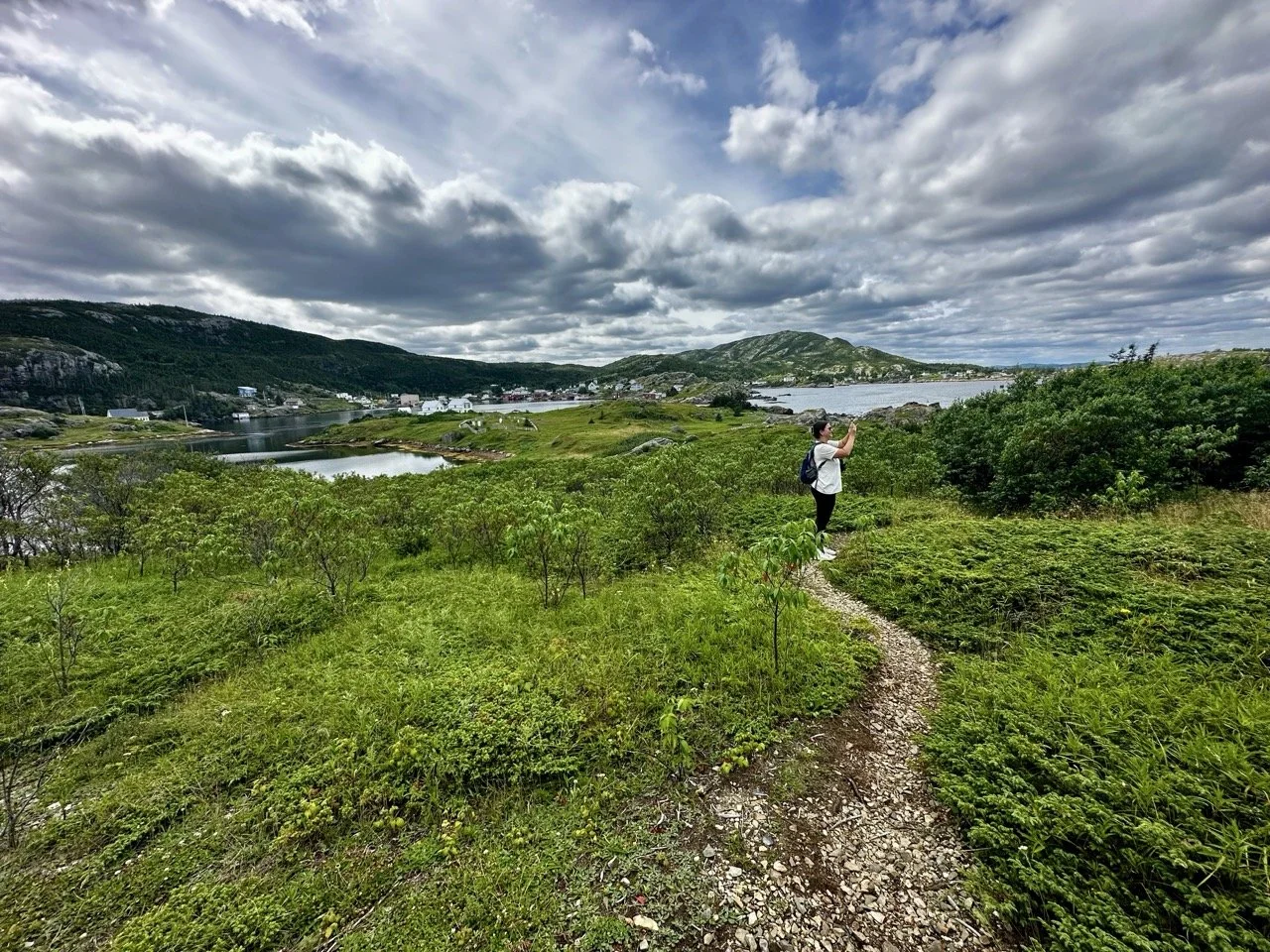
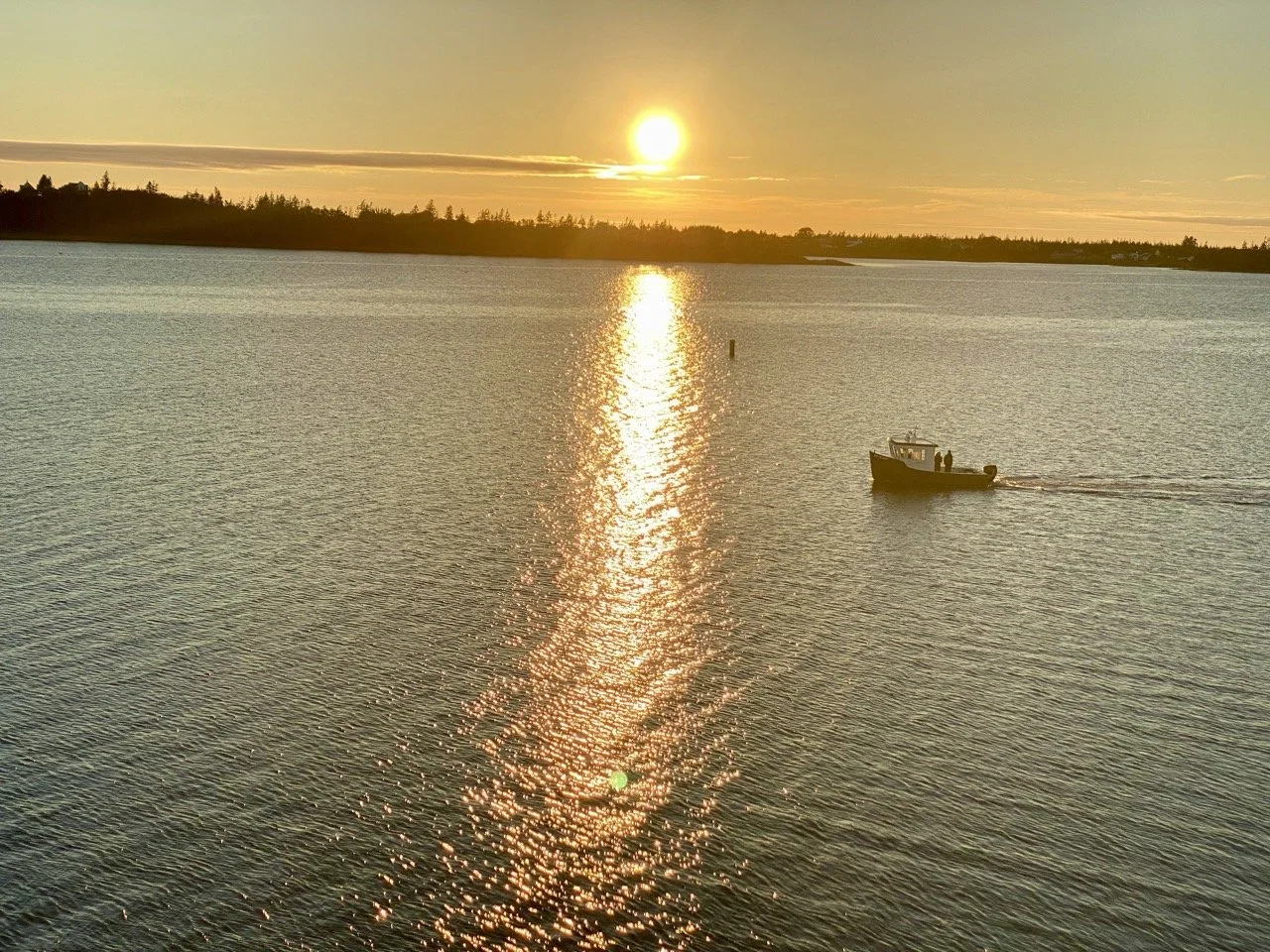
I mentioned before that that the Trans Canada Trail offers a chance to connect with nature and each other, but it also offers the chance to connect with yourself.
There’s a lot asked of us in the modern world. We’re meant to respond to emails and messages, regardless of the hour — but deciding to take a moment for yourself, and to walk or to cycle or to hike or anything in between, it’s a way to claim something back for us.
I remember attending a conference with the Travel Media Association of Canada in Yarmouth, Nova Scotia. I didn’t have a lot of free time, but I did note that there was a trail that started northeast of where I was staying, “Yarmouth Rails to Trails,” an 87 kilometre route, no less. Now, I didn’t have my bike there, but I did have a pair of walking shoes and hiking boots, and that meant that, much like the locals, I could take some time to gather myself on this trail, in between all the meetings and events.
And you could argue that I did better at that conference precisely because I made time to get away from the busyness of it all.
What I’m getting at is that, we can always prioritize this kind of time. If I’m visiting a friend in Calgary, for example, I now know there’s over 100 kilometres of trails around the city.
Rest, peace, reprieve — they can feel like luxuries in today’s world, but they can be prioritized when we realize that, if we’re keeping our eyes and ears open, there are trails all around us (and they’re likely maintained by the very people who want you to feel a part of that community).
It’s a Place to Learn
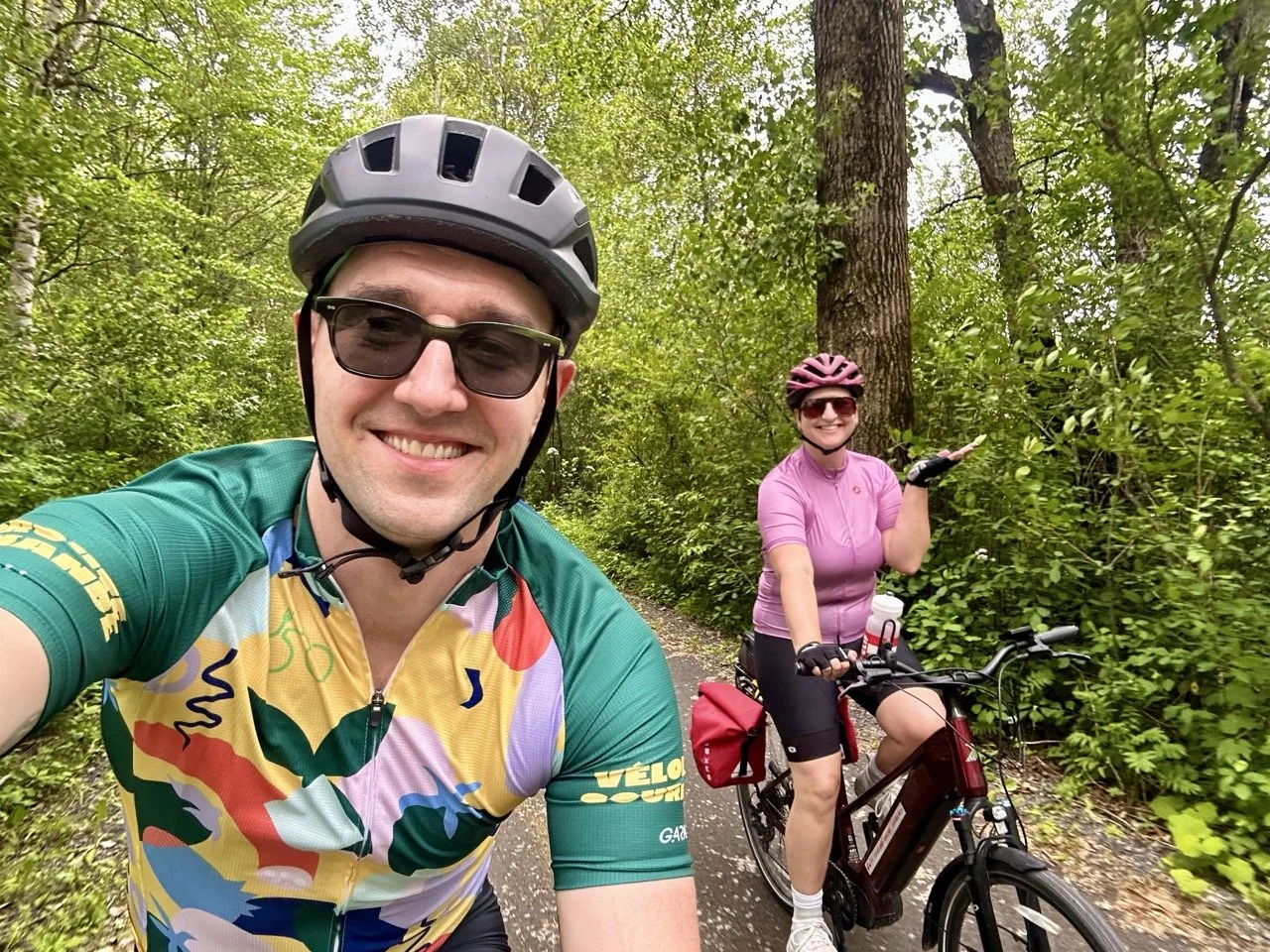
Bri and I riding the Véloroute Gourmande in Québec. Photo Credit: Christopher Mitchell
Investment in the Trans Canada Trail helps the flora and fauna in and around the trails grow and thrive, but it also helps with our growth as well — through opportunity and education.
For one, they aim to move reconciliation forward through support of Indigenous-led trail projects, and work collaboratively with Indigenous partners to ensure that trails reflect the histories, cultures and priorities of First Nations, Métis and Inuit communities.
They also aim to have clear and consistent branded signage to help you find trailheads. I’ve even planned cycling routes where I didn’t know I’d be on sections of the Trans Canada Trail, but thanks to that signage, I knew I was. This happened innumerable times while Bri and I were riding the Véloroute Gourmande in Québec, for example.
Many people don’t realize this, but the Trans Canada Trail also provides employment subsidies for youth, training workshops, curriculum ideas for educators (and as former teachers, we love to see that), and resources for those interested in becoming more involved with maintaining and taking care of trails. You can find out all about that, here, if that interests you. A lot of this training happens at the aptly named Centre for Trail Excellence.
It Gives to You, and You Can Give Back
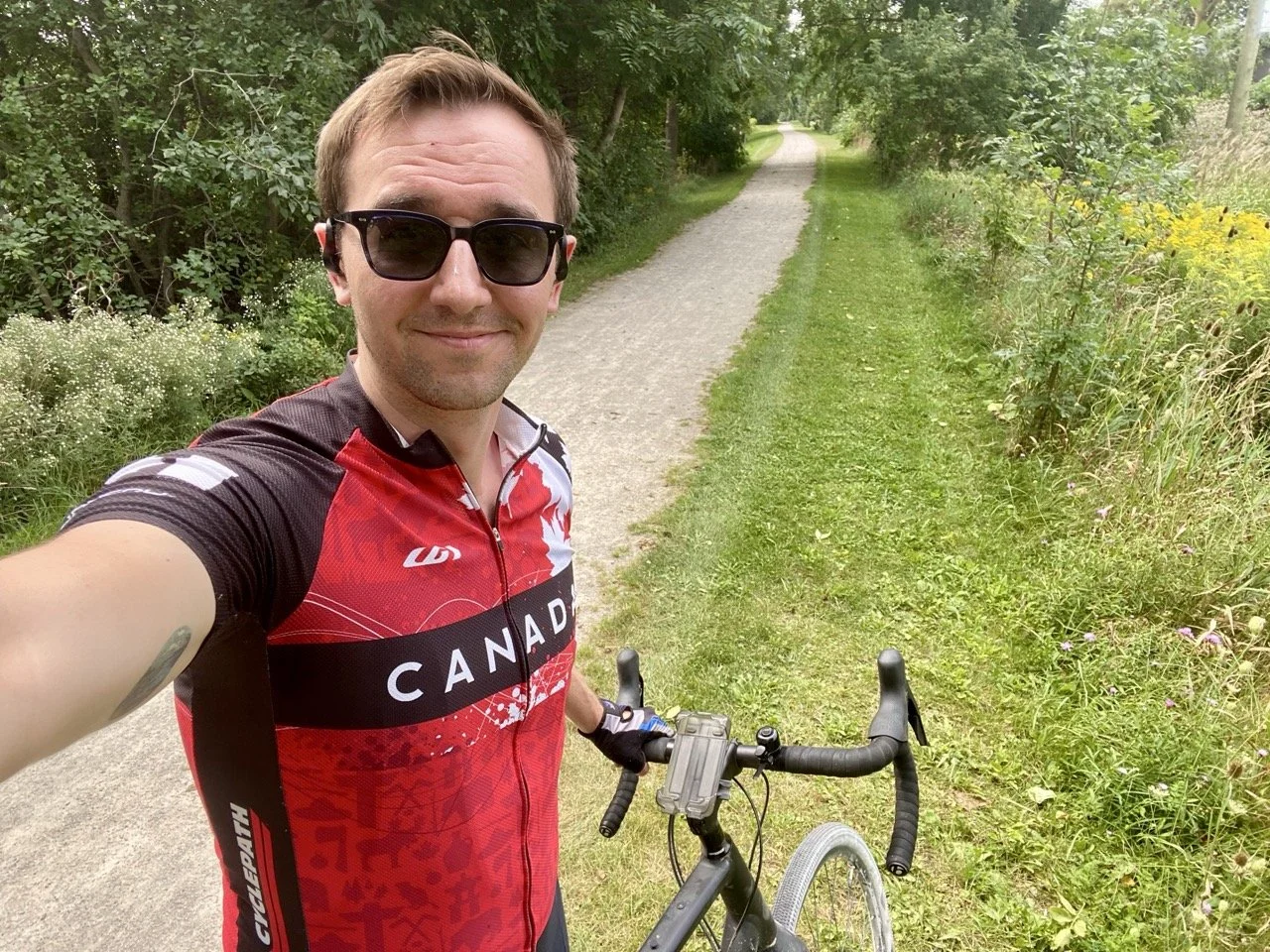
Long live the rail trail. Photo Credit: Christopher Mitchell
As we get grow wiser on this planet, it’s natural to think about how we can have a meaningful impact. We want to make time for the things we love, and we start to feel a little less conflicted about doing just that.
I suppose, in some ways, this is why I wanted to create this article in the first place — to put eyes on a trail that has given me more than I could ever repay.
You can volunteer, perhaps becoming a trail steward, you can look into trail care grants if you become a part of a trail group, or even just use your voice to the Trans Canada Trail which, fittingly enough, describes itself as “Canada’s leading voice for trails.”
You can donate money, of course, but you can also donate time, care, love, and empathy to this important cause. There are many, many ways to support.
In the end, this is about ensuring that future generations will have the chance to do their own reflection, establish their own appreciation, and find their own peace on the trails. To me, these trails have become a metaphor for what it means to be truly connected in today’s world — and all while your phone is placed, decidedly, on silent.
We want to thank for the Trans Canada Trail for working with us as media. All opinions are completely our own.