
The Top Things to Do in Reykjavik: Making the Most of Your Time in Iceland’s Capital City
Whether you’re beginning and ending your trip to Iceland in Reykjavik, or you’re like me and plan to use this Icelandic capital as your base between bucket list day trips around the country, there are some great things worth checking out in this compact city near the Arctic Circle.
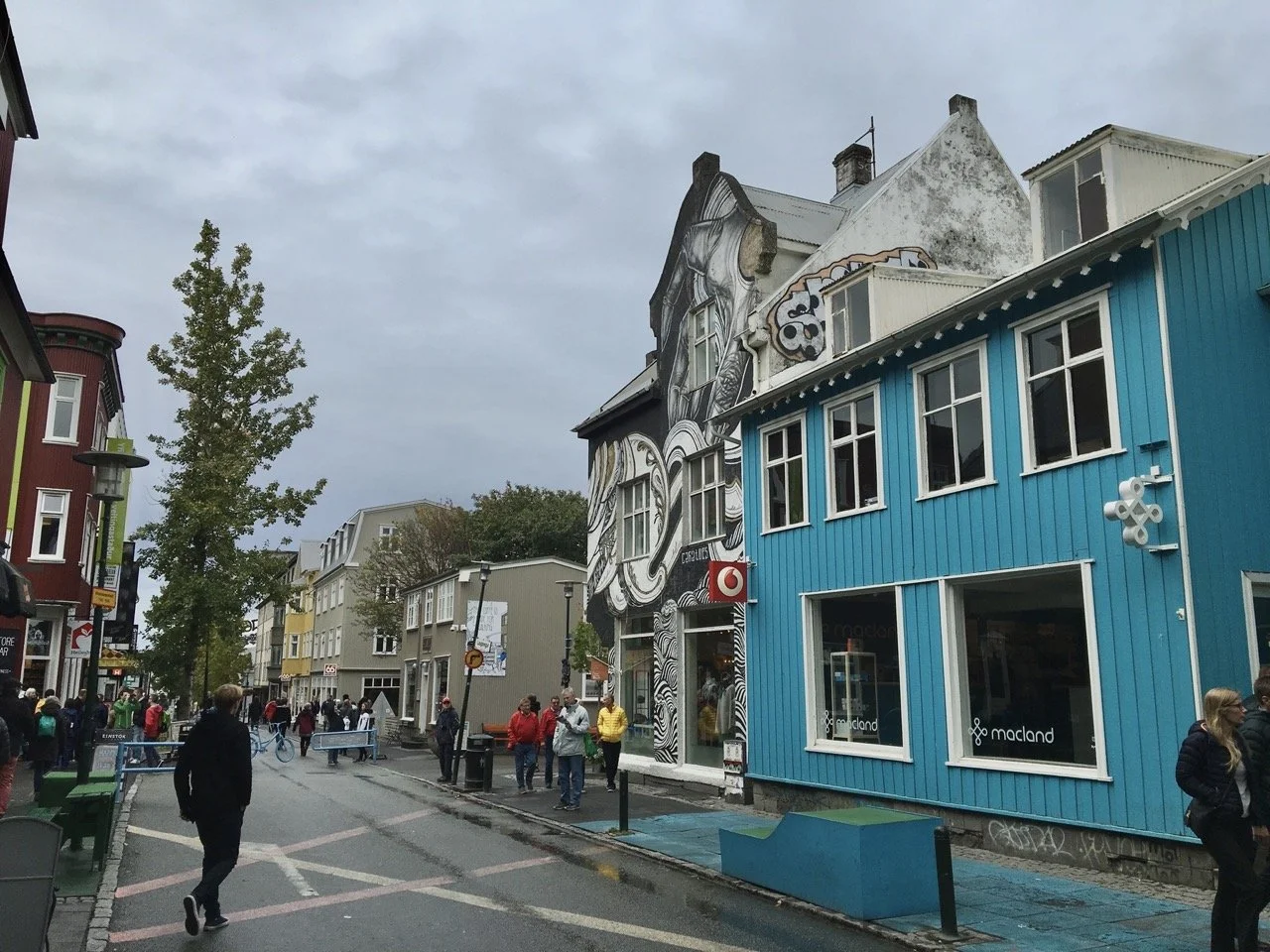
Bright colours and street art about in downtown Reykjavik
For the longest time, Chris and I wanted to visit Iceland. Travelling to the country was right up there with other bucket list trips we’ve taken to places like Italy’s Amalfi Coast, Argentina’s Iguazu Falls and Japan’s ancient city of Kyoto.
I feel like my interest in Iceland first began around the time I started listening to the band Sigur Rós. Their moody, ethereal and somewhat haunting sound (in its own unique category called “cosmic post-rock”) introduced me to the artistic inspiration Icelandic landscapes naturally evoke. When I watched their 2007 documentary Heima, which follows them as they play music in natural spaces across their awe-inspiring countryside, I was hooked.
So when the opportunity finally came for Chris and I to travel here, we had a short five days to visit the country. Admittedly, we had our sights primarily set on seeing Icelandic horses, volcanos, waterfalls and other-worldly landscapes. But we both ended up really appreciating the city of Reykjavik. Considering that it’s a small city of less than 140,000 residents, it has the heart, soul and quirky spirit you’d hope for from a city so close to the Arctic Circle.
Since Iceland is a relatively large country—we didn’t want to try and cram in a drive around the whole Ring Road on this trip—we decided to base ourselves in Reykjavik and take day trips from the city. We were so glad we had the extra time to learn about and appreciate Iceland’s capital.
Please note that this article contains affiliate links. This means we may receive a small commission for some of the recommendations made in this article, at no additional cost to you.
A Few Tips for Travelling in Reykjavik and Iceland

Me and Chris at Seljalandsfoss
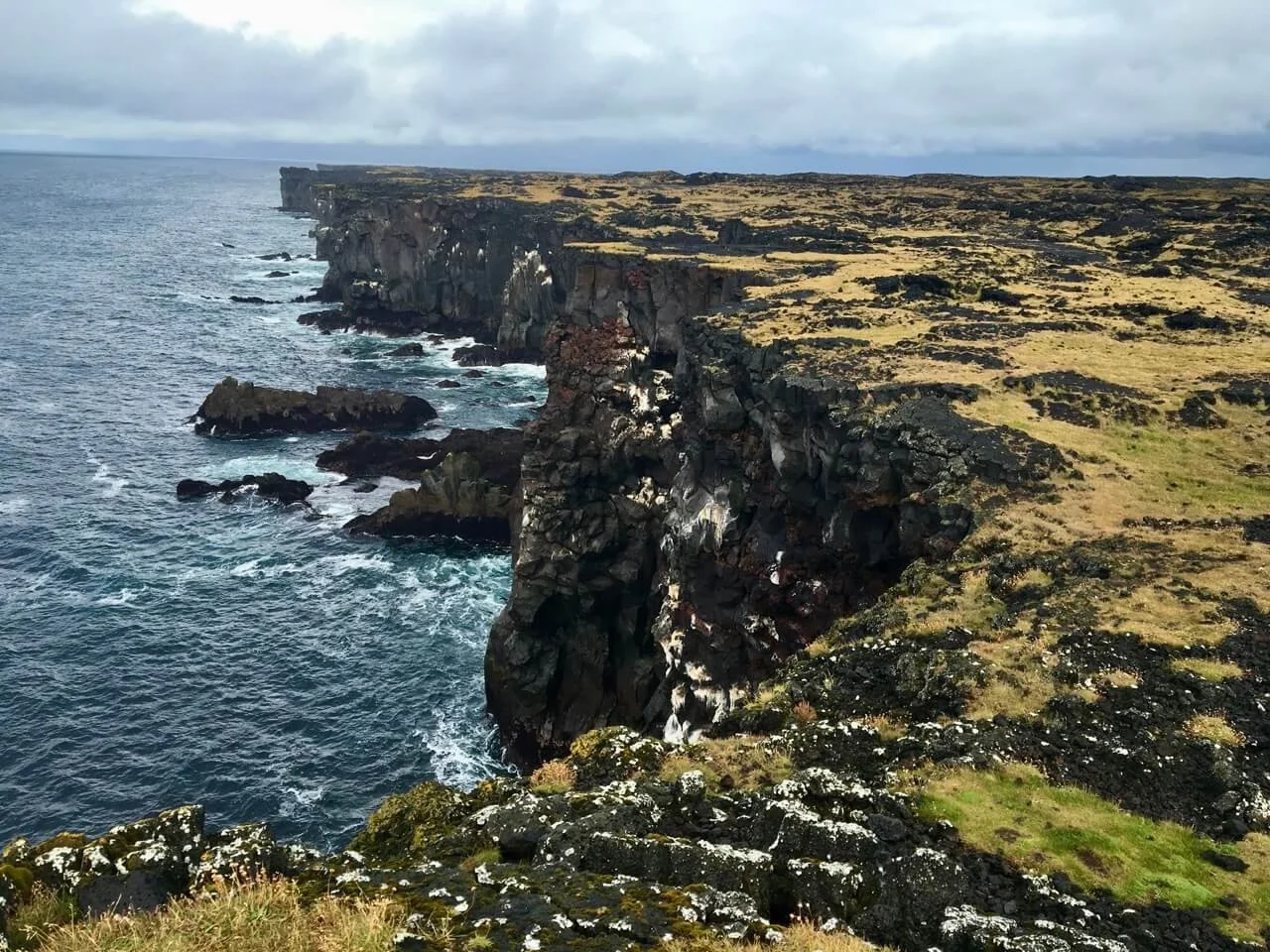
Dramatic cliffs along the Snæfellsnes Peninsula
For most travellers like us, Reykjavik will be your access point to all of Iceland. It’s a great place to base yourself to enjoy day trips from the city if that’s up your alley. As Canadians, Chris and I are comfortable squeezing a lot into a lengthy day trip filled with driving, so we had a few ambitious days. But this worked out well for the time of year (September) and short time we had in the country, and for those with tighter time frames I’d recommend it.
Here are a few more things I think you should consider ahead of your trip:
Think about the best time of year for your visit. Travellers visit Iceland year-round, but as a nation just south of the Arctic Circle and in the middle of the ocean, cold temperatures and inclement weather can be hard to predict outside of the summer months.
Summer is the preferred time of year to visit for many. It’s the time of the midnight sun with long days and overall warmer and more dry conditions—but wind and rain are always a possibility!
Chris and I visited in September, and unfortunately there was very little sun during our visit! September is also the time of year when the daylight hours start to decrease, campsites close, and there can be a lot of rain or wind.
A friend of mine visited around March/April one year and also got stuck in a white-out on the road while driving. Inclement weather in Iceland is not for the faint of heart! So double check the time of year you’re visiting, and make sure you make the best plan for that time of year.
Winter visits are a draw for outdoor activities and attempts to spot the northern lights, but be prepared for a lot of snow, and bring several layers.
Get your packing list organized ahead of time. Iceland is the type of place where you’ll want to bring as many technical layers as you can.
There’s no need to over-pack, but you’ll likely need waterproof footwear (this is my favourite brand!), a few thermal layers, a waterproof coat, a toque, and a good sweater or two.
Prepare for things to feel a little more expensive. As a remote island nation in the North Atlantic Ocean, you can expect the cost of goods, services, fuel, etc. to come at a higher price.
To work around this, more budget-focused travellers visit during the warmer months either in the form of a van or camping trip.
The cost of meals out comes at a higher price-tag too, so focusing on dining out for lunches or brunches (as opposed to dinners) is a good option if you’re looking to make more mindful choices.
There’s also a helpful website called Happy Hour, which lets you know about happy hour prices and deals happening in restaurants and bars in Reykjavik and some other parts of the country.
I’d also recommend doing your homework and checking out Sigur Rós’s documentary Heima before you arrive! It’s a beautiful film which serves as an excellent introduction to Icelandic band Sigur Rós’s music, but it’s also a love letter to the people and landscapes of Iceland.
How to Get to Reykjavik and Getting Around
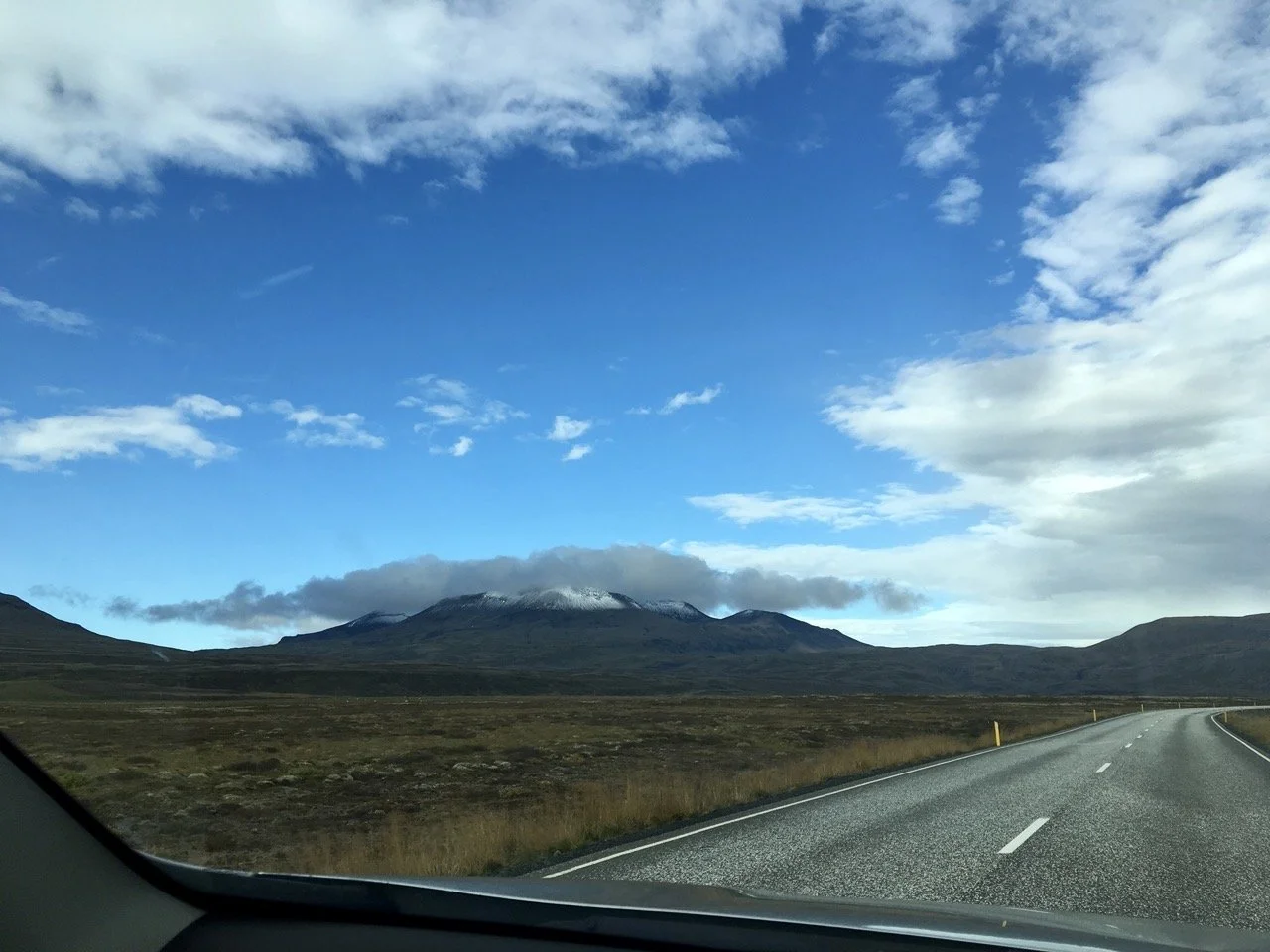
Road tripping around Iceland
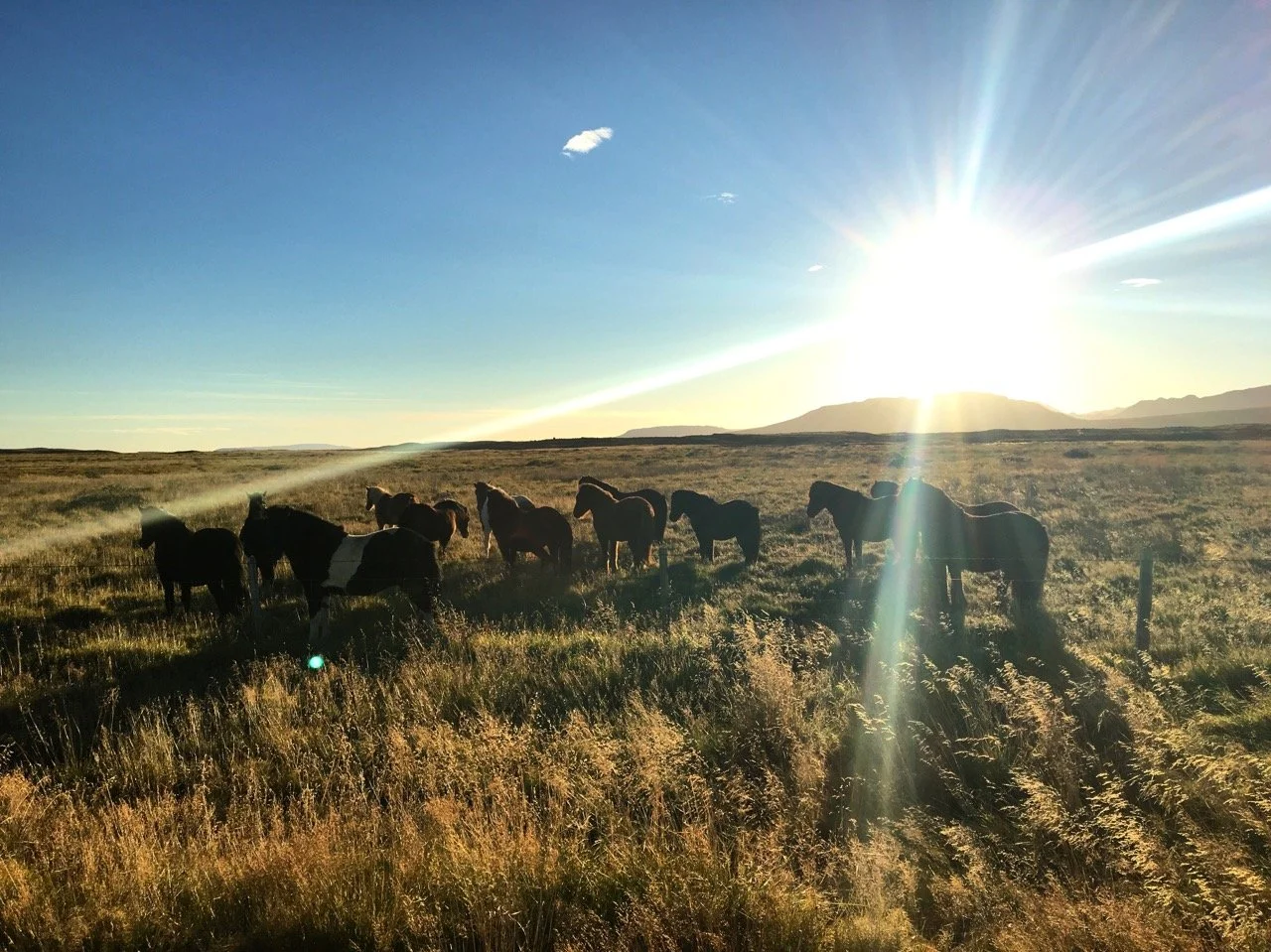
Icelandic horses grazing near the road
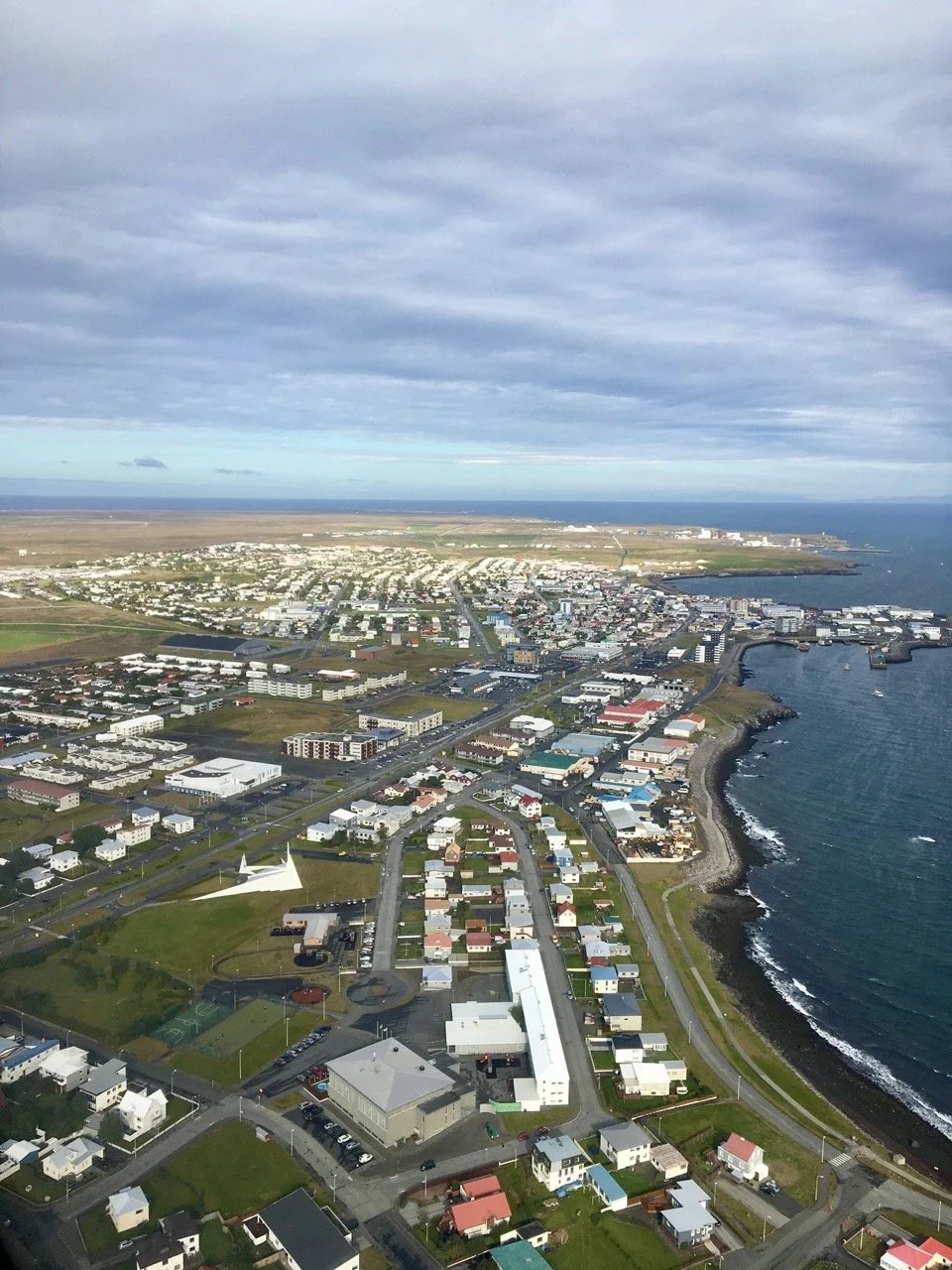
Descending over Keflavik
When it comes to arriving to Reykjavik, most international travellers arrive by plane to Keflavik International Airport (KEF), in the nearby town of Keflavik. The most common carriers are local airlines like Icelandair and Wizz Air, but other airlines like EasyJet, British Airways and Lufthansa have routes here, too.
Some people arrive to Iceland by sea, too. There are some cruise ships that port in Reykjavik, and other travellers come to the country by ferry from mid-March to the end of November. The M/S Norröna runs once per week from Hirtshals, Denmark to the opposite coast from Reykjavik in Seyðisfjörður, with connections to the Faroe Islands. The journey takes about 48 hours from Denmark, though, so this is for more slow travel-oriented visitors, and Seyðisfjörður is approximately a 10 hour drive from Reykjavik.
All that to say, flying to Reykjavik is definitely the easiest and most common way to arrive!
Getting Around Iceland
If you land in Keflavik, many people rent a car to tour Iceland on their own, but there are also reliable bus connections. The Flybus is the most common service, and it takes around 45 minutes from the airport to the central bus station.
Renting a car from the airport is a great option for those who are comfortable driving internationally. While I wouldn’t recommend driving a rental car during months where they might be ice and snow, it’s a good option in milder months. Getting a car with a 4x4 system is a must. Most main roads are well paved and maintained, but smaller roads aren’t always as reliable. Knowing the speed limits is also important, since there are unmarked speed cameras all around the country. Chris and I had to learn about this the hard way after our trip!
If you’re leaning more towards basing yourself in Reykjavik and not renting a car, there are plenty of ways for you to get around the country on either public transport or local tours. There are a few popular tours you can consider here, which I’d recommend checking out:
Things I’d Recommend You Do in Reykjavík
Whether you’re only spending a couple of hours in Reykjavik, or making it your base for seeing more of the country, its compact size makes it easy to either enjoy several of these experiences in a shorter time, or spread them out over several days into bite-sized pieces. In no particular order, these are the top things to do:
Stay Somewhere in the Heart of the City
Reykjavik is compact and walkable, which makes staying somewhere downtown so much nicer for getting yourself around while you’re in town. If you need to park a rental car while you’re in the city, finding a place that has parking available is a good option, too.
I personally love the areas in and around the Old Harbour and Skólavörðustígur. The Exeter Hotel, Reykjavík Treasure B&B and Reykjavik Residence Suites are great options. But of course you’re welcome to use the map below to help you find the perfect place that fits your needs for your stay.
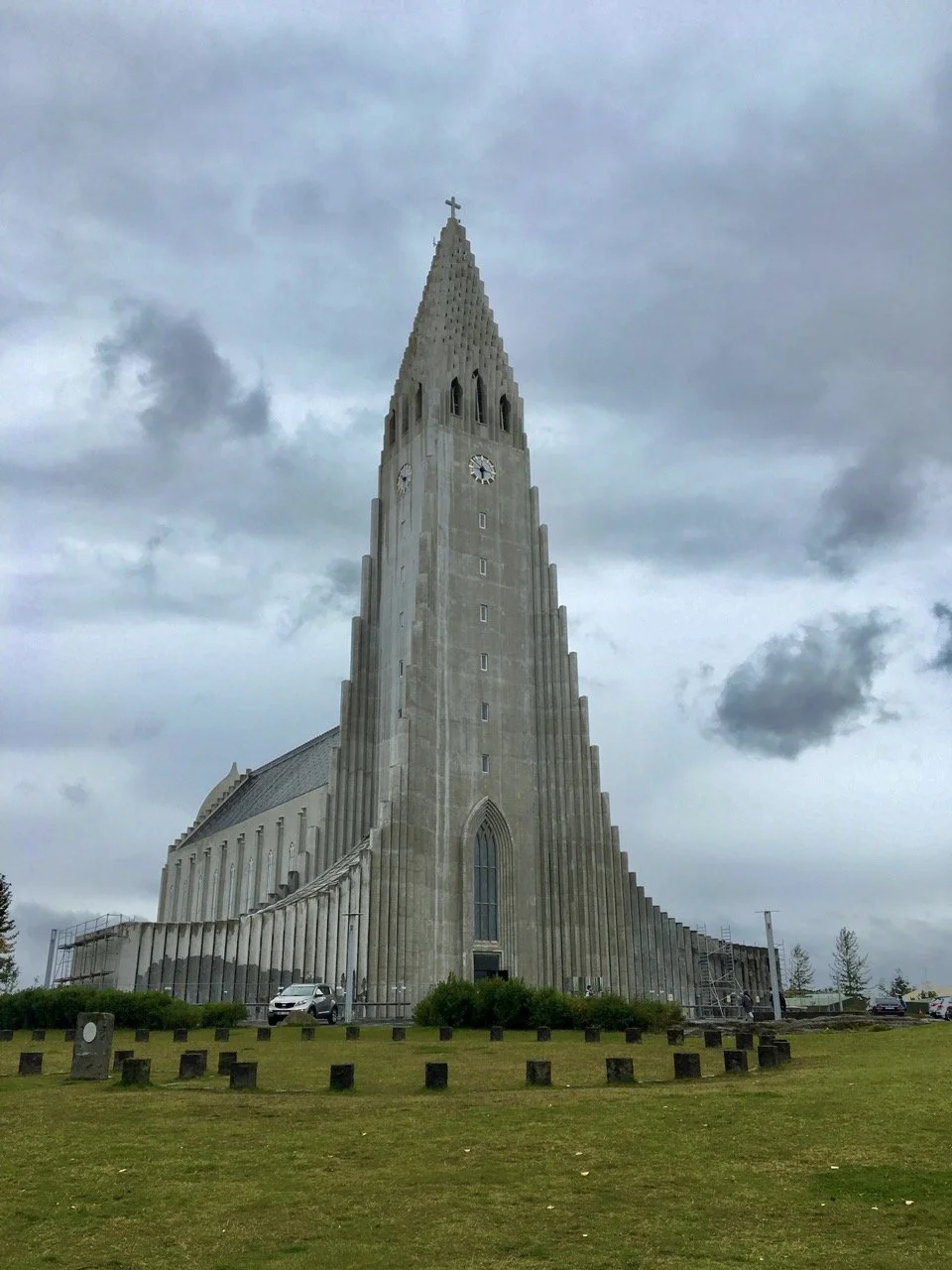
Take in Views of the City from Hallgrimskirkja
From the time you first touch down in Reykjavik, it is hard to miss Hallgrimskirkja towering over the city. I even saw it plain as day from the plane when we were descending over Keflavik. You’ll see much smaller Icelandic churches scattered throughout the country, but this church was built in the 1980s to pay homage to its more typically-sized compatriots.
Religion aside, there’s no question that the 73m height of Hallgrimskirkja offers some of the best panoramic views of the city and surrounding mountainous landscapes.
You can visit the observation tower for a fee from 10am to 4:30pm on most days. Double check before you go to make sure it’s open at the time you want to visit.
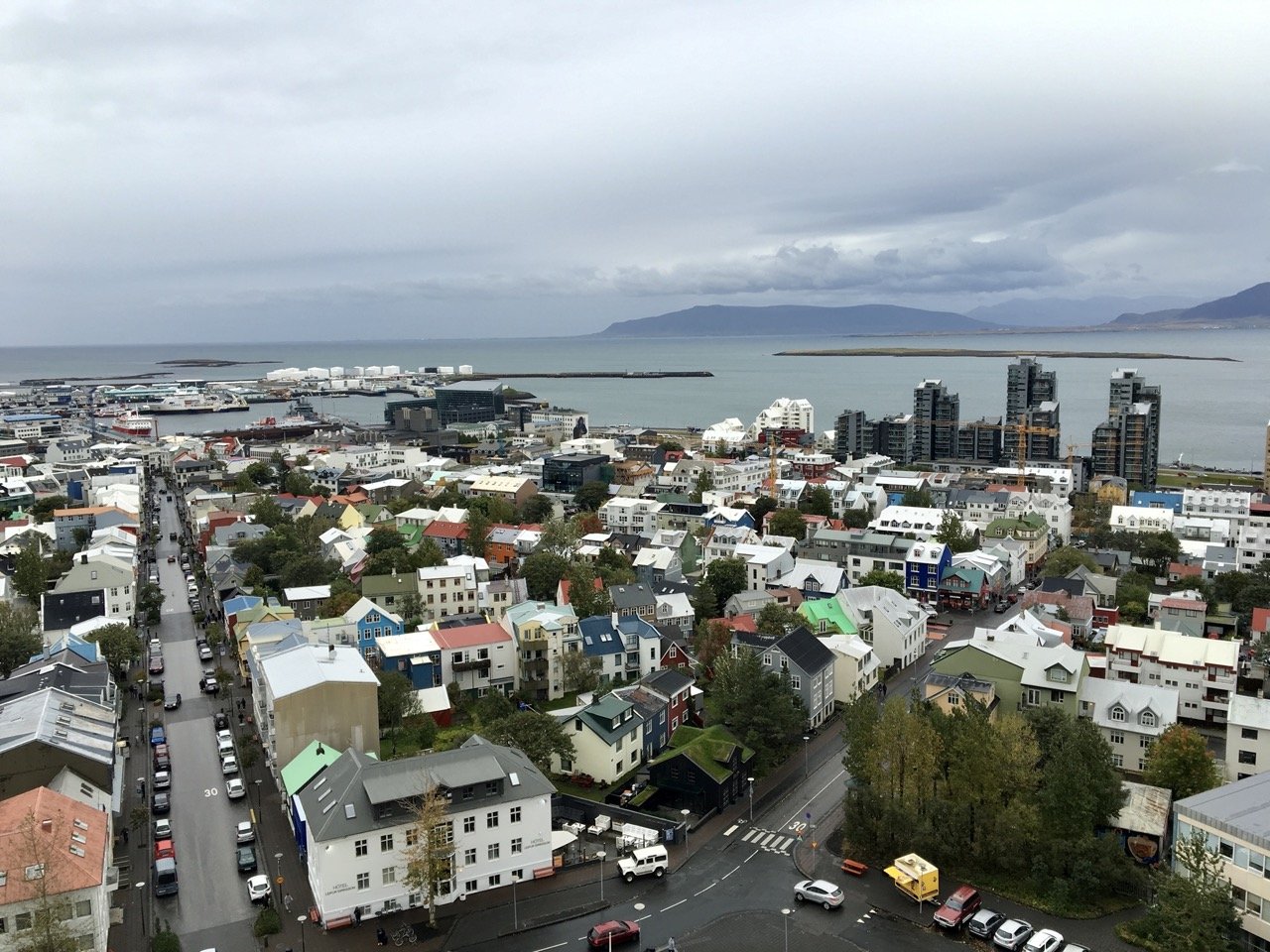
Views of the city from Hallgrimskirkja’s observation tower
Visit the Old Harbour
The old harbour was the original access point to Reykjavik from the water. While it’s changed over the years and has more to offer for tourists as opposed to those heading out on fishing boats nowadays, it’s still a great place to go to visit shops, cafes, museums and spend time by the water.
There are several places worth checking out while you’re in the old harbour. The Reykjavik Maritime Museum and the Whales of Iceland museums are each worth stopping at. In terms of dining, Seabaron is a cozy, historic spot to grab some tasty traditional seafood dishes, and Kaffivagninn is a famous little restaurant touted as being the city’s oldest.
You can also walk out to the end of the pier to see the outdoor installation Þúfa, created by artist Ólöf Norda.
Take a Peaceful Stroll around Tjörnin
Tjörnin (which translates to “The Pond”) is a charming, sizeable pond in downtown Reykjavik. Several important places in town are around here, including Reykjavík City Hall and The National Gallery of Iceland.
Chris and I especially loved the pedestrian paths that circle the whole of the pond. It’s a really pleasant place to come for a walk, especially if the winds are strong oceanside.
Catch a Performance at Harpa Concert Hall
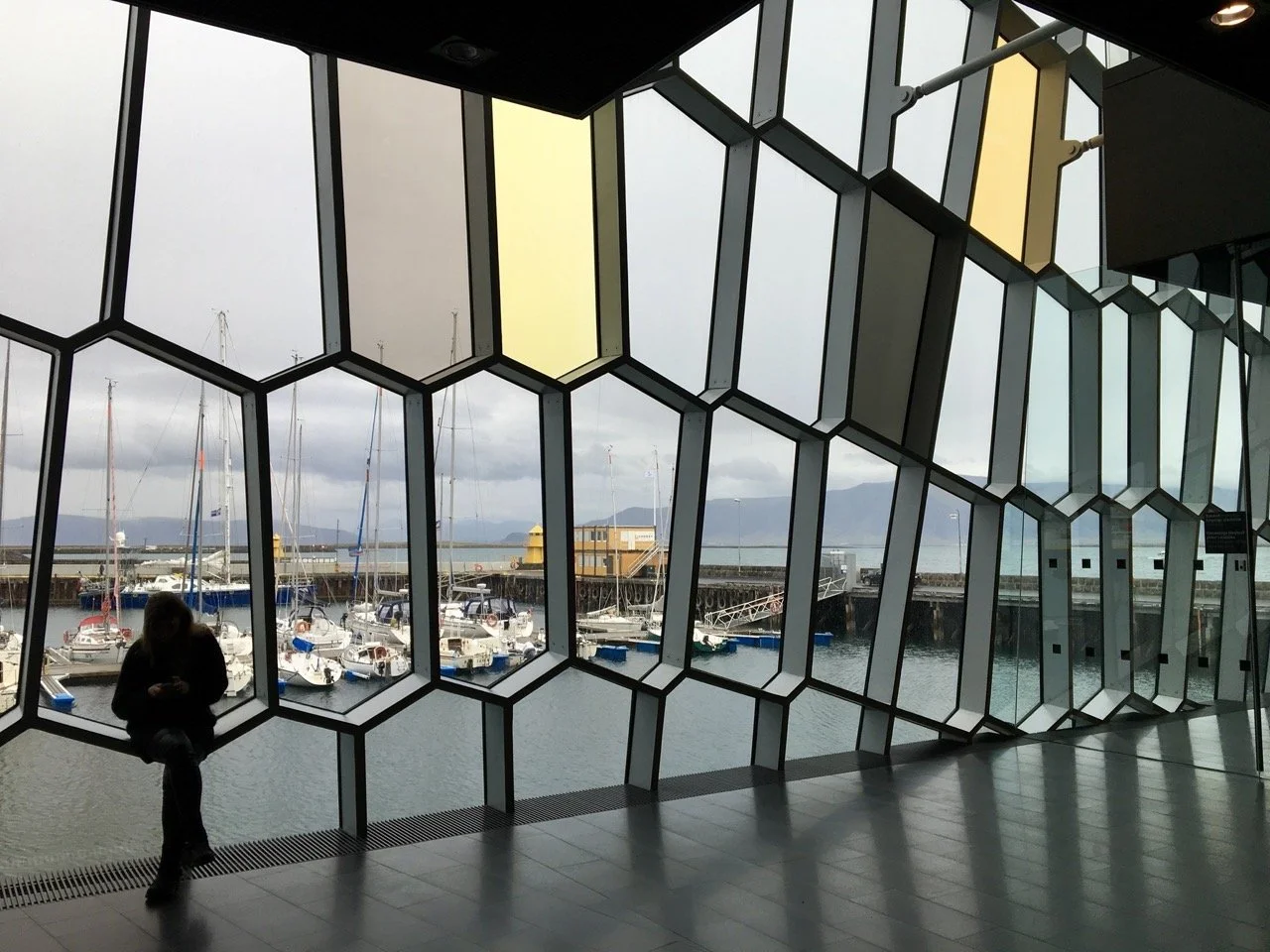
Whether you recognize Harpa for its architectural magnetism on the water or from its appearances as a music venue in the absurd comedy Eurovision Song Contest: The Story of Fire Saga (starring Will Ferrell and Rachel McAdams), it’s a place worth visiting during your time in Reykjavik.
All sorts of events and performances come through Harpa’s stages. It’s the resident home of the Iceland Symphony Orchestra and the Reykjavik Big Band, to name a few. I’d recommend checking out what’s on at Harpa in case something catches your eye while you’re in town.
While you’re in the area, there’s also a nice walk along the Sculpture and Shore Walk, where you can see the Sellóspilarinn and Sun Voyager sculptures.

Dine on Icelandic Cuisine
Dining out can come at an expense in Reykjavik, but it’s worth doing on at least a few occasions if you’re able to.
When you’re in Iceland, celebrating dishes comprised of fish and seafood, hearty stews, cured meats and cheeses and dense breads is the name of the game. If you’re an avid beer drinker, there are also quite a few craft breweries and micro breweries in Reykjavik.
Some great spots to grab a bite are Icelandic Street Food, Seabaron and Old Iceland. And don’t forget to give food staples like Icelandic hot dogs, lamb soup, plokkfiskur (Icelandic fish stew) and Arctic Char (an indigenous vegetable to Iceland) a try.
Take A Walk in Search of street art, Vibrant Buildings and Local Cats
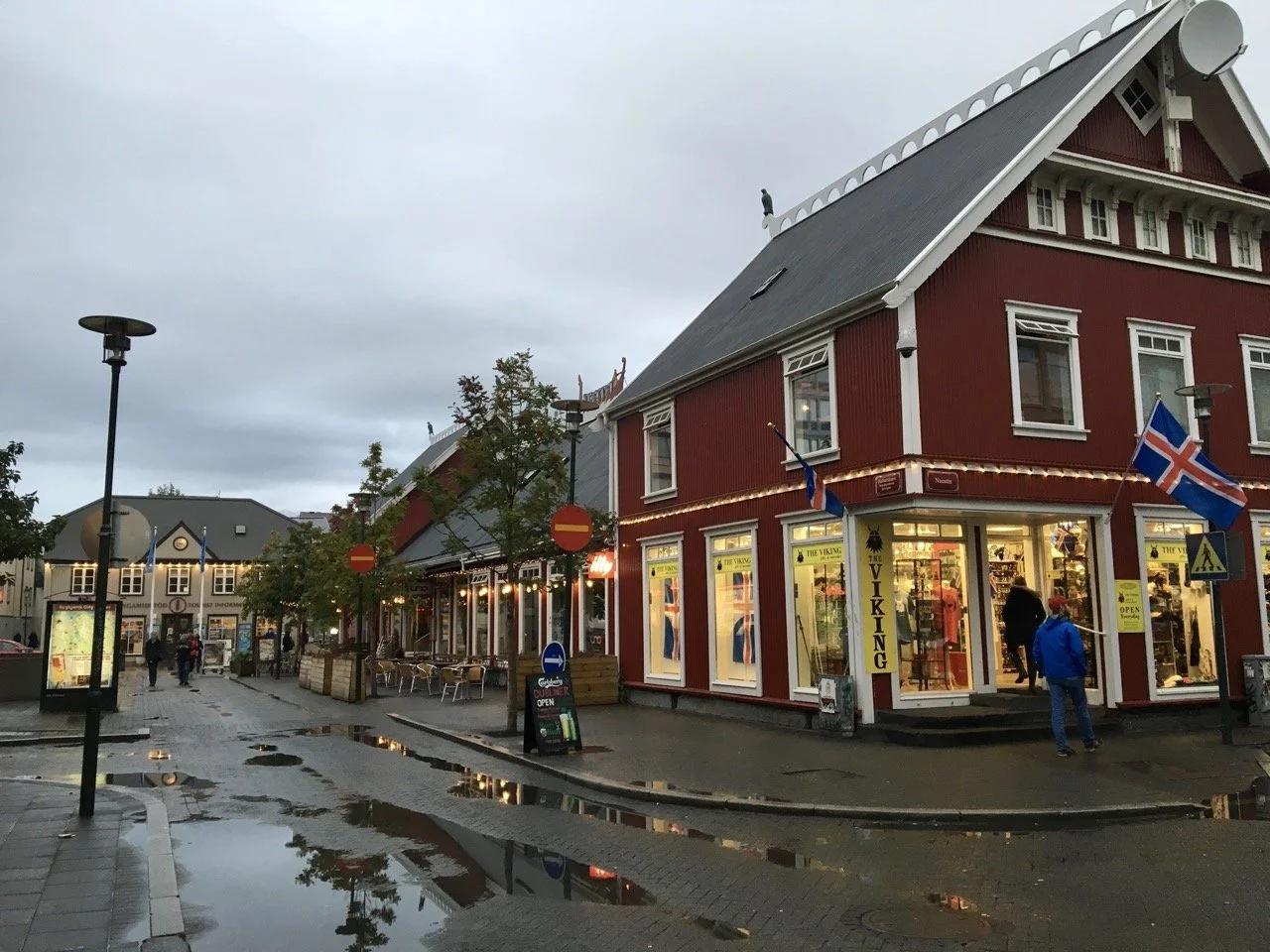
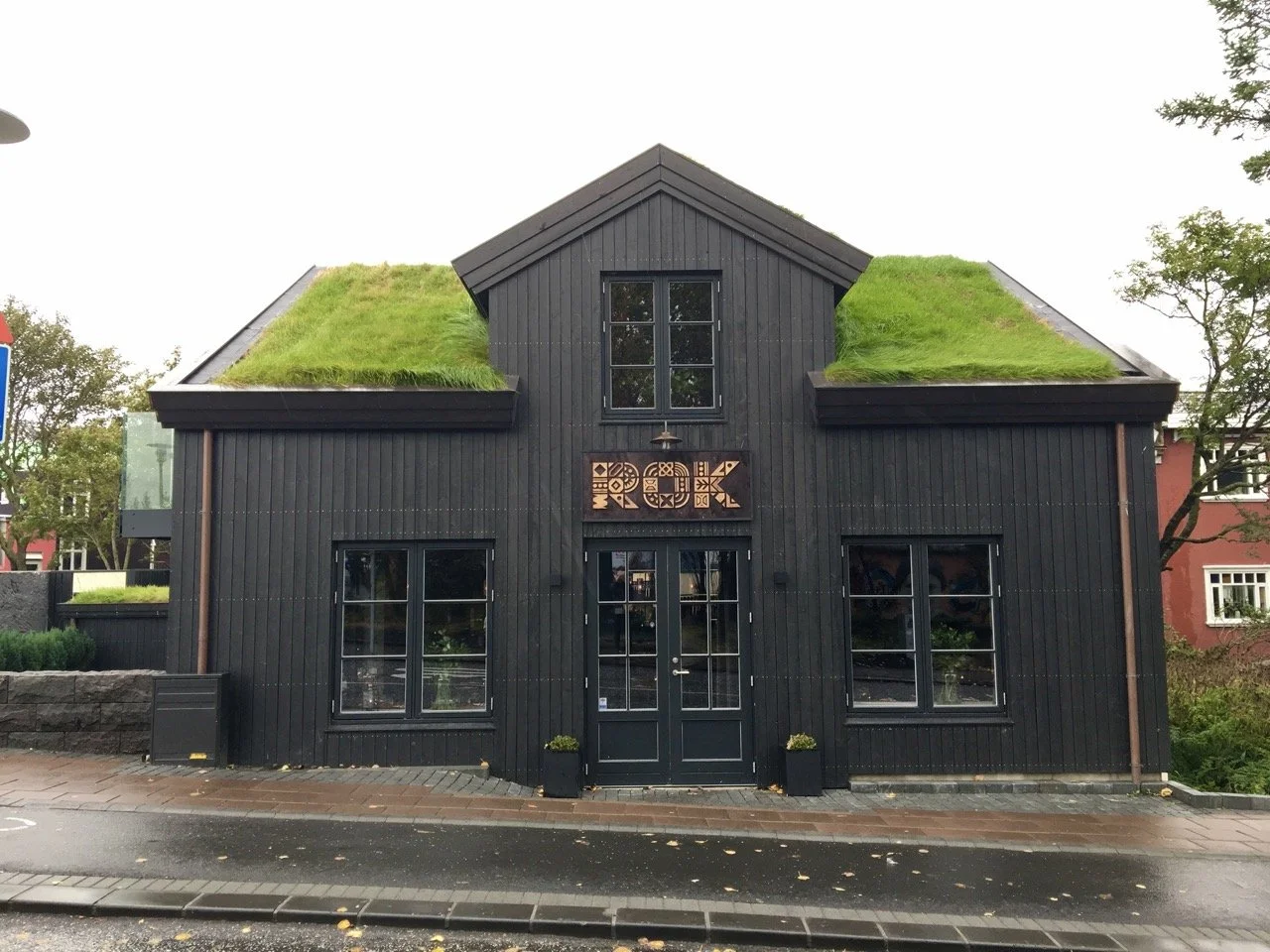
As with many cities, simply planning to take a walk and see what catches your eye is a lot of fun in Reykjavik. When Chris and I walked around, we spotted a lot of street art, brightly coloured buildings, and we even noticed a few buildings with Icelandic turf roofs on them.
A few notable items to look out for are the brightly painted historic buildings downtown, the famous painted Skólavörðustígur Rainbow Street, and many large murals like the Vampire Mural at Laugavegur 66.
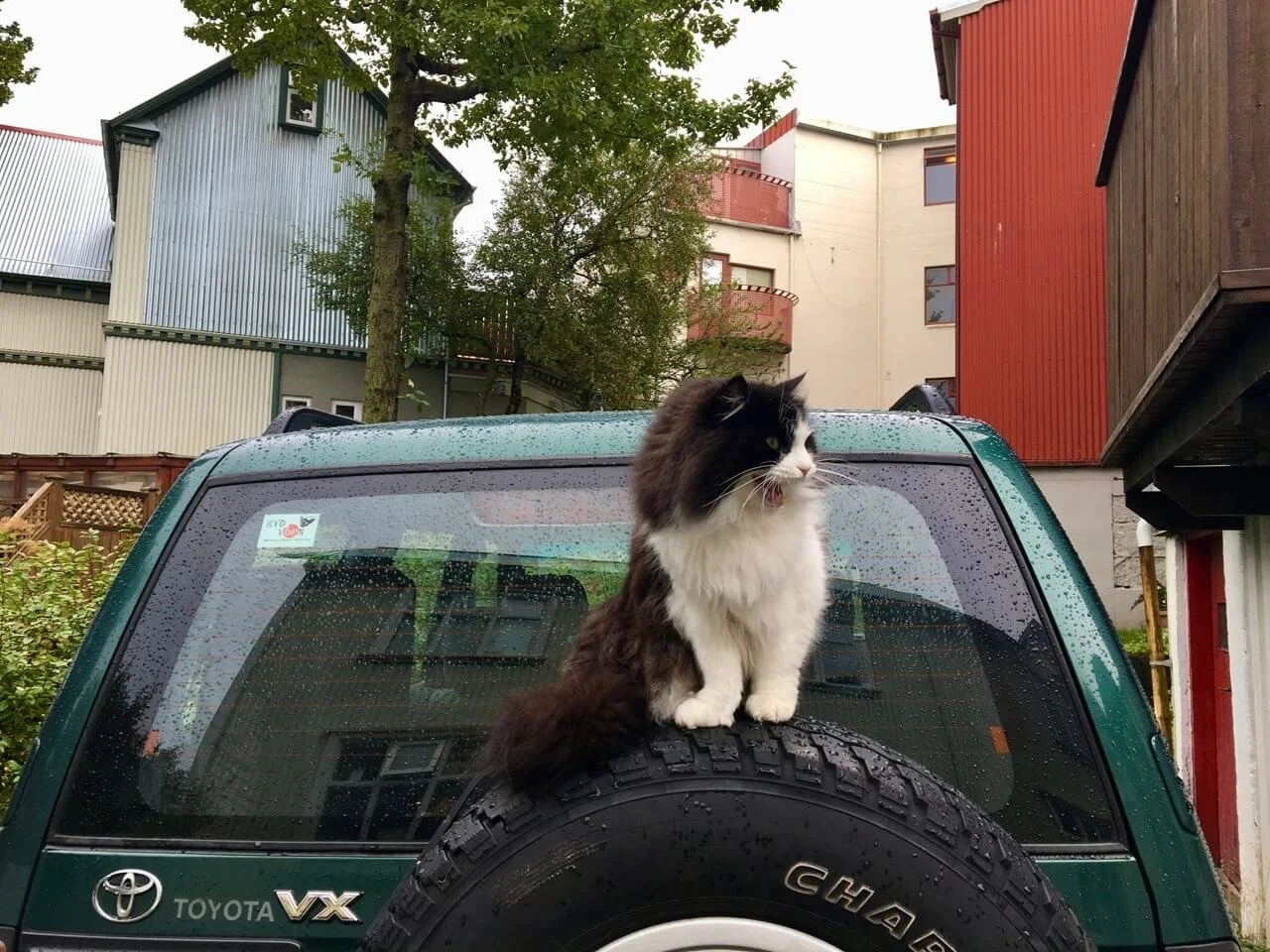
Reykjavik is also well known for its local cats! Much like the sheep in the country, almost all of Reykjavik’s cats are owned by someone, but many wander the streets by day and return home at night. As a cat owner and animal lover myself, I’m thrilled that the cats of this city have no large predators to worry about. (It isn’t quite the same for indoor/outdoor cats in my home country of Canada!)


Pick up your own Icelandic knit Sweater
As an avid traveller, believe it or not I am not an avid souvenir shopper. I know that for many people, this is a staple of each trip, but it’s typically not for me. But the Icelandic Lopapeysa (wool sweater) is one of the best types of souvenirs you can buy, since not only is it a functional souvenir that you can wear for years to come, but it supports local artistry and a historic tradition in Iceland.
Icelandic wool has been used for over 1100 years. Sourced from freely grazing sheep, their wool is light but retains heat, repels water and breathes very well. This makes Icelandic wool a truly functional fibre to wear in wet, cool climates.
You can find wool sweaters in shops across Iceland, but Reykjavik has a larger concentration of stores. Being in the city also means that these stores have a wider selection of styles, colours and sizes.
On one of the days Chris and I were walking around, we came across the Wool Shop in the Skólavörðustígur shopping area, which is connected to The Handknitting Association of Iceland.
As much as I love the traditional pullover knit sweaters with detailing around the neckline, I was looking for something a little more versatile that I could integrate more readily into my wardrobe. I came across a gorgeous, long cardigan-style knit sweater made by the Reykjavik-based company, Varma, at the Wool Shop—their selection and inventory is impressive.
You can feel the financial weight of most purchases in Iceland, but I knew this would be an investment piece. I’m so pleased to say that this sweater has been a tried and true staple in my wardrobe for several seasons now, and I don’t see how I’ll ever let go of it!
Slow Down the Pace at a GeoThermal Spa
What is now Iceland was created tens of millions of years ago by volcanic activity that erupted above the ocean’s surface, since it sits on the Mid-Atlantic Ridge. This divergent meeting of tectonic plates between North American and Eurasia is what makes Iceland a mantle plume and volcanic hotspot.
As you make your way around Iceland, you’ll notice steaming pools at the side of the road or in the distance across the country. Iceland has harnessed this by making geothermal energy its primary source of power. And of course, many geothermal spas have also been opened to provide a different kind of energy to those looking to power down.
The most famous of these spas is the Blue Lagoon, located in the direction of Keflavik from Reykjavik. It’s a massive and heavily touristed spa, but definitely worth checking out if you have the time. In 2021, Sky Lagoon also opened up in the town Kópavogur, which is just south of Reykjavik on the edge of the ocean.
These spas make for an incredible excuse to appreciate the beauty and nature that abounds in Iceland, and take a moment to be present and not so consumed which ticking off all of the places to visit and things to see on your trip. If you appreciate spas, you simply can’t leave Iceland without visiting one—it’s a must-do.
Don’t Forget to Visit Places Outside of Reykjavik, Too
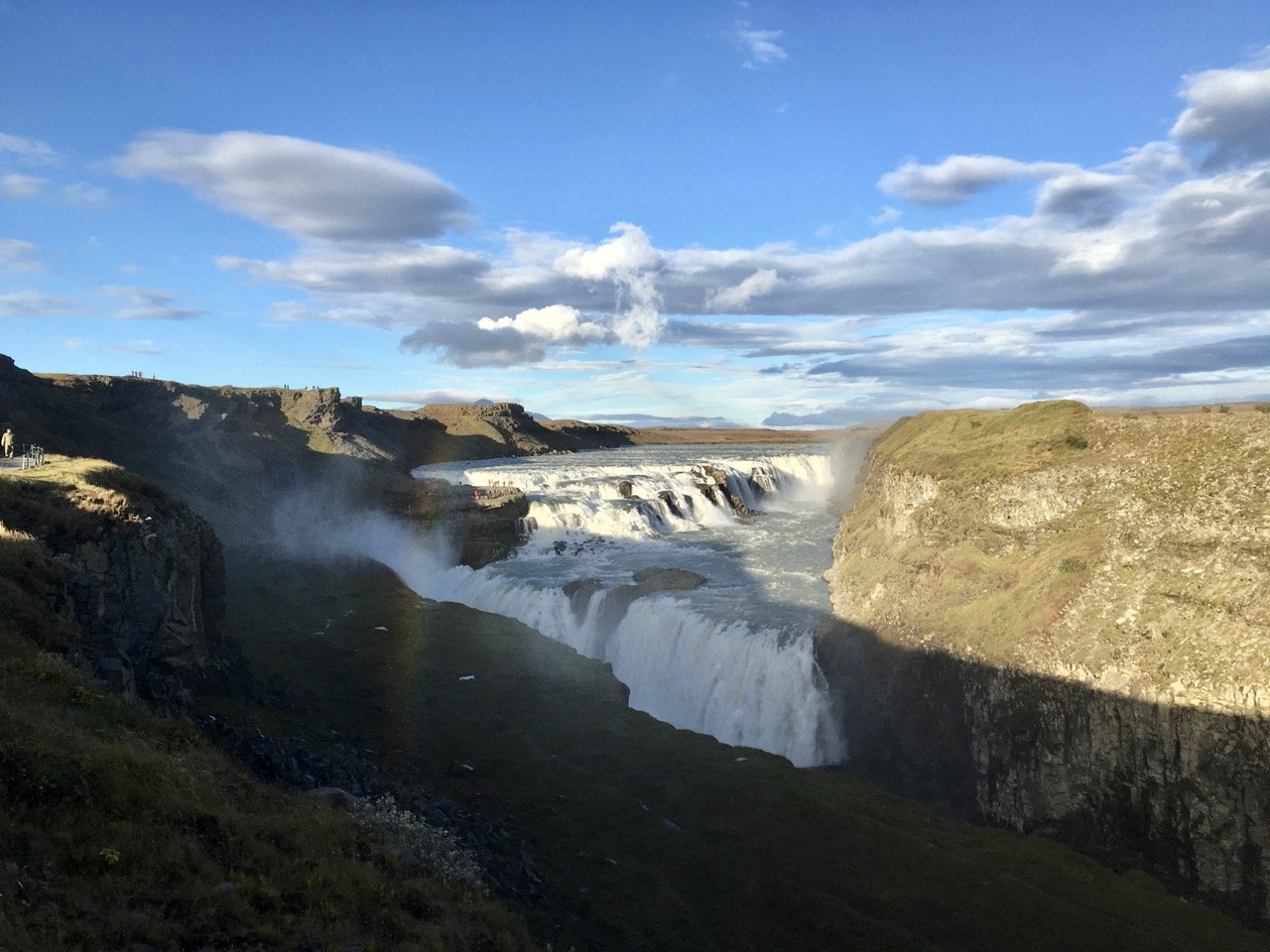
Gullfoss in the sun. When the sun does come out, look for rainbows!
As much as I enjoyed our time in Reykjavik, even if you’re short on time in Iceland, you do need to make sure you head out of the city and into the countryside at least once. A few highlights for me and Chris were spotting countless waterfalls, seeing Icelandic horses grazing near the roads, hiking through landscapes of volcanic rocks and beaches, and driving around the Snæfellsnes Peninsula.
Whether you’re only in Iceland for a few days or you plan to spend much longer here, let the weather and the surroundings be your guide. Chris and I played more than a few hours’ worth of Sigur Rós in our time spent day tripping from Reykjavik, and I have to say that listening to their music together while being surrounded by the landscapes that inspired it just felt right.
If you’ve never listened to Sigur Rós before and you appreciate music, be sure to give them a listen before you visit. “Hoppípolla” (which translates to “jumping into puddles”—isn’t that a great way to think about travel?) is a good place to start.

Bri Mitchell
Bri Mitchell is a travel writer and content creator from Toronto, Ontario. She loves to highlight all things nature, food, wellness, sustainability and adventure in her work. Bri writes and shares her travel experiences from across Canada, the United States and around the world on Instagram and TikTok (@brimitchelltravels); in her articles for travelingmitch, Ultimate Ontario, and We Explore Canada; and in her weekly travel newsletter, The Weekly Traveller.