
The Neurodivergent Case for Travel: From Passport Stamps to Personal Growth
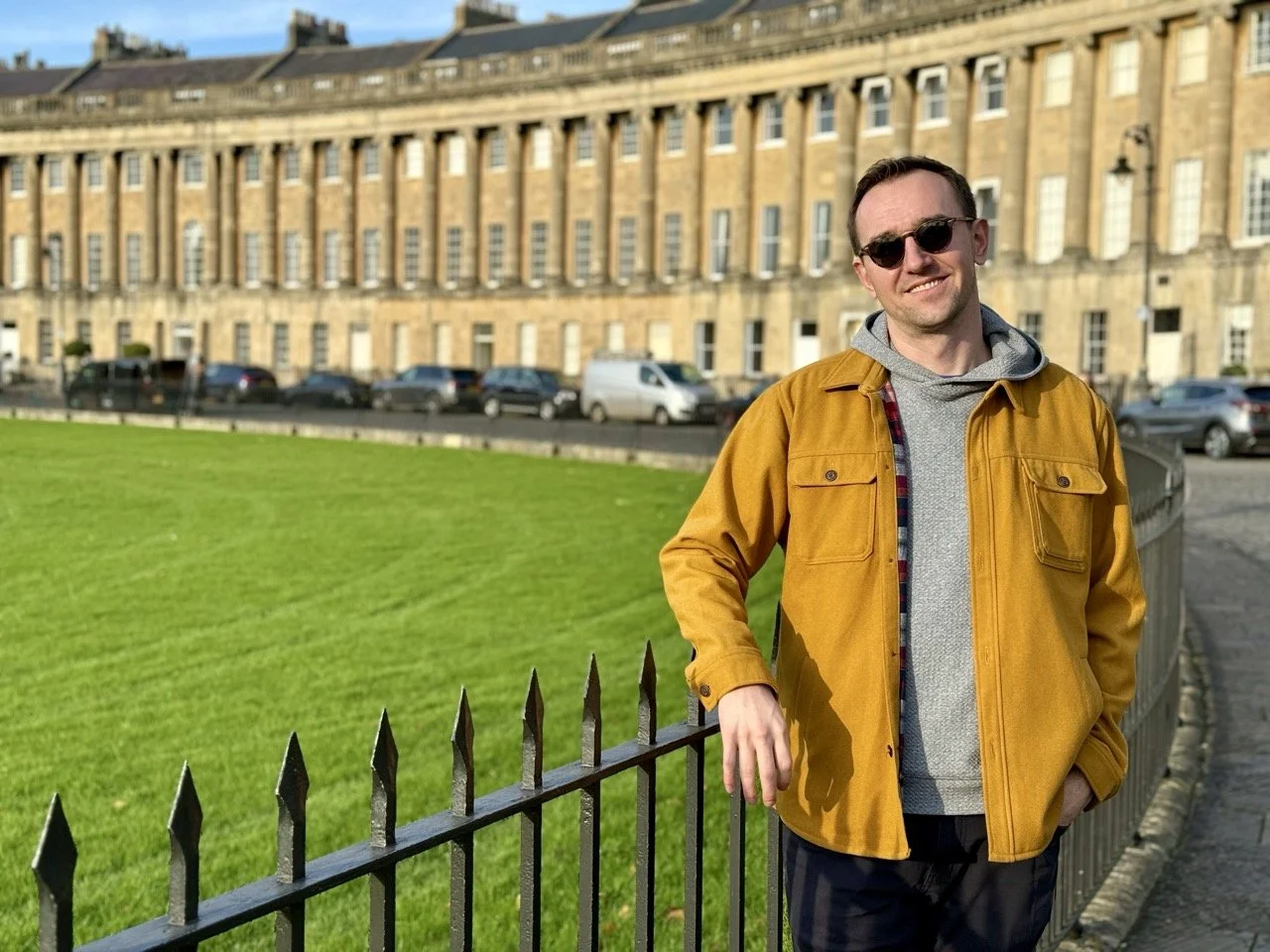
Bath, England - 2024. Photo Credit: Bri Mitchell
I’m not sure I found calm until I found travel.
As someone who grew up with a healthy dose of ADHD, and who later discovered that anxiety was going to be the cherry on top of all of that, I remember being almost unable to be present at times. Unless I was playing sports, I was often there, but somewhere else.
I’d be waiting all day for school to end so I could play with friends, then while playing with friends, my mind would be on dinner, and during dinner, I’d ponder on what I could do that night to ensure I wasn’t enveloped in the dreaded blanket of boredom.
And then, when I was in the latter part of my elementary school years, we took a family train trip from Toronto to Vancouver. Sitting still, I quickly found out, wasn’t an issue for me if I happened to be sitting on a train with a beautifully bubbled, clear roof to allow me to see the Canadian Rockies unfold before me.
What I didn’t realize then, but I do now, is that, for my brain, it was critical to put myself in positions where awe and humility collided. The striking array of mountain peaks around me served as an implicit reminder that, perhaps, the seemingly never-ending, often critical internal soliloquy I had wasn’t a curse I was born with, but just my own thought patterns in this vast landscape of humanity.
Or more simply put, it forced me to think bigger. To think outside and beyond myself. That permanent soliloquy that I was used to running at 2x speed (at least), was…a lot quieter.
I had a narrow view of education, (and as a former teacher, I can attest to the fact that perhaps that’s the predominant state of many an 11 or 12 year old boy) at that time. I thought of learning more or less as rote memorization, but I can distinctly remember, on that train ride, being almost tingly with excitement that perhaps learning wasn’t about all that we could remember to put onto a respective test paper — but about putting yourself in positions to experience things you’d never forget.
Travel taught me presence
Others with ADHD may resonate with the feeling of some semblance of a lingering shame. Growing up, I’d struggle to focus on my successes, and instead would run-through the laundry list of ways that I’d fallen short.
An overreaction in class to an inconsequential issue. Not having the ability to pull back and reflect, before taking out a sharpened verbal dagger in an argument. My total fear of going to bed at night, with jittery legs to physically manifest what was going on mentally.
Now, I realize that I wasn’t alone in this. Everyone is neurodivergent to a certain extent. I think of it like a colour palette of paint that we can see on our trusty computers now, with thousands of variations of different colours. I was my own shade of green, let’s say, but so many others had their own variation.
Speaking of green, I can still recall arriving at the Dublin Airport when I was around 15 or so, and spotting the green of the Irish flag (and, of course, the landscape shortly thereafter). I was there to study Irish authors at Trinity College for the summer.
I headed from the airport to student housing, where I was roomed with two younger fellows who seemed more concerned about Abercrombie & Fitch than Oscar Wilde and James Joyce, but it ended up working out great, because I could sense that the way that I was immersed in this experience was a little different.
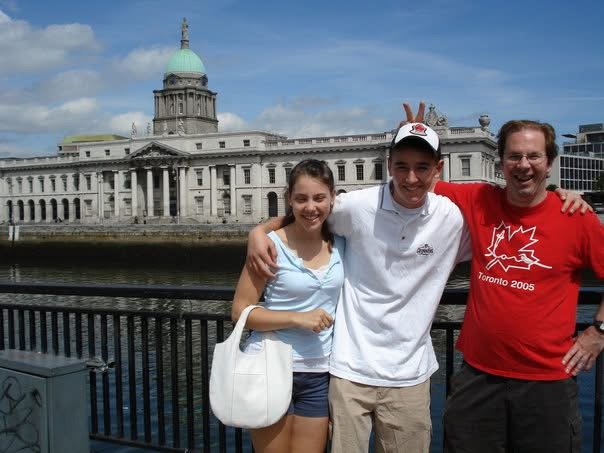


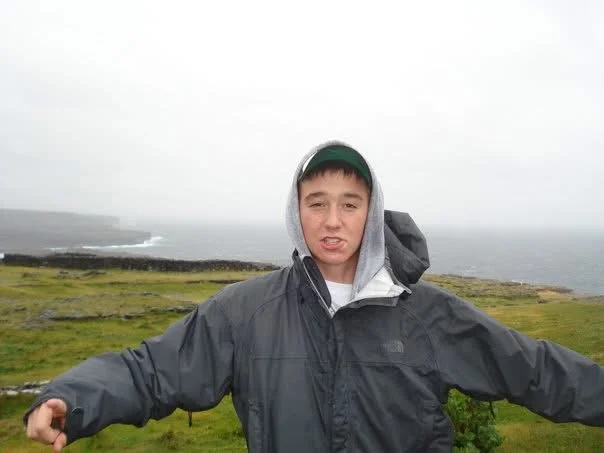
That was the first sign for me that my neurodivergent stack, when it came to travel, was a benefit. I couldn’t walk down a street without noticing the minutiae — the signage, the smiles of shop owners, the church on the side-street with soft bells ringing.
That soliloquy in my head? It was gone. I was more concerned, all of a sudden, about soaking in the moment, then I was soaking in the tepid bath of negative recurring thought patterns.
When my roommates bought beers from the convenience store to sip on in the room, I’d head to the pub to have a Guinness with the locals (thanks to my older brother for his ID, by the way!). When they listened to music in our shared living area, I’d head out and listen to live music, and try to chat with the musicians.
I didn’t have the same fear of the unknown as other kids seemed to. It was much more of a curiosity with the unknown, quite honestly.
I was hungry to learn, but also infatuated with the idea that I had so much to learn — but all of a sudden, it wasn’t a negative. I began to realize that education for me was going to be about giving myself the context I needed to live more fully. If I was going to visit the Book of Kells, then I needed to know about it before visiting, to ensure that I could be present.
Now that I think about it, perhaps that was where the first kernel of travelingmitch was born. If I knew I was going to be writing about a destination, to help guide others, then I needed to be present, neurodivergence be damned.
Travel taught me perspective
Another thing that people with my lovely mix of neurodivergence can attest to — trust can be an issue. Now, in my case, I’m probably too trusting of people. My issue was never on that front, but rather having faith or trust that people in positions of authority had my best interests at heart.
If I had a teacher that I felt thought I was smart, and believed in me, I did everything I could to try hard for them. If I had a teacher who wrote me off, I vowed to prove them right, and make their job all the harder. That’s part of why I spent years teaching, in fact, to ensure that kids like me would have their place to shine in my classroom.
What travel taught me is that it’s almost absurd to live with a “me against the world mentality.” We are, in the end, just a small part of this larger world, no matter how loud your own narrative in your head is.
I studied buddhism when we lived in Korea, and used to meditate in a park near our place in Seoul. I was about 19 or 20 at that time, and was taken by a religion which is, generally speaking, void of the dogma that I’d seen in a lot of other thought movements until that point.
Learning about the “ego” was very helpful for me in switching from a micro to a macro perspective. I read voraciously about Buddhism, which slowly lead into stoicism.
Reflecting back, I feel like travel not only offered me new perspectives to ingest, but also was this reminder to me that our perspectives on this world need not be hardened. We should always be open to a new conversation or idea. In other words, our values should be constant, but our views should be malleable.
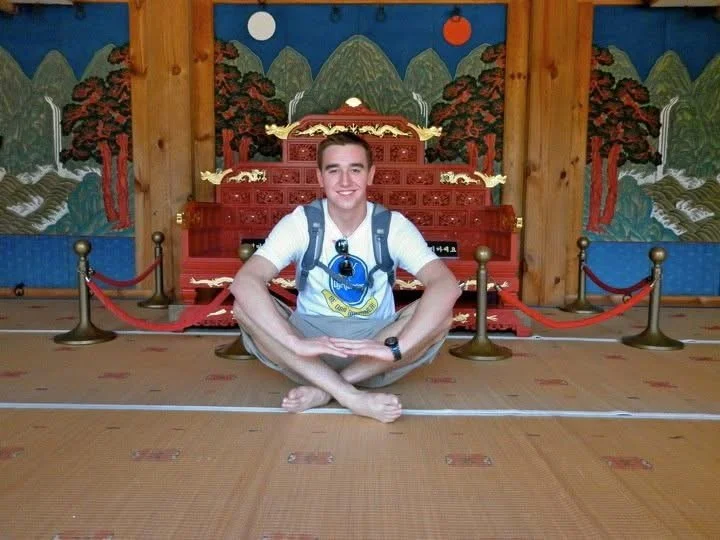
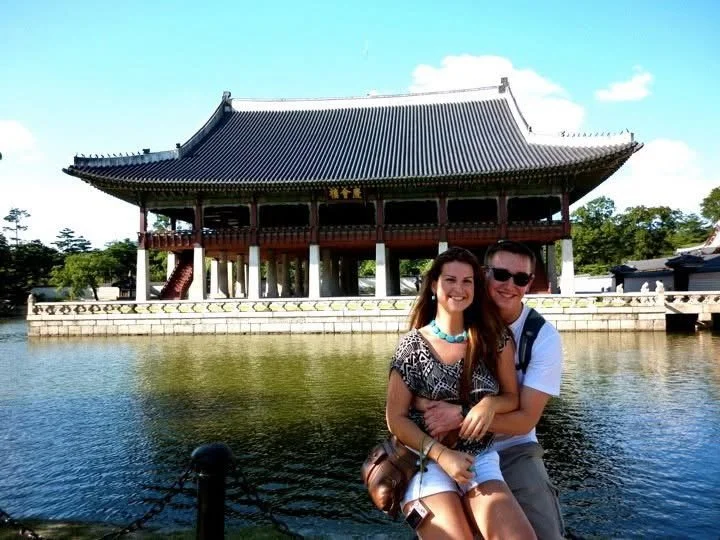
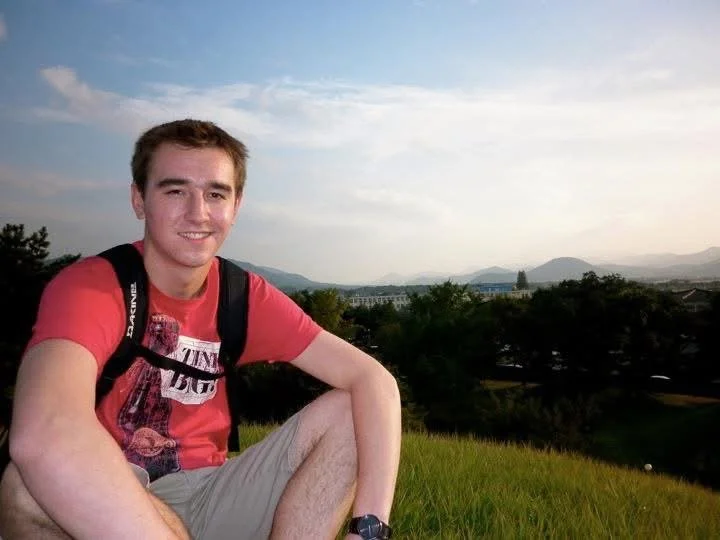
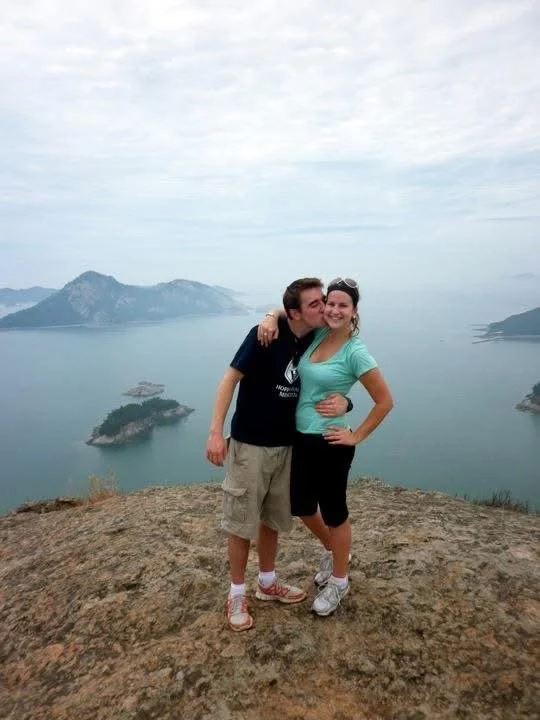
Now, I also recognize that heading to new places helped me shed layers of emotional skin that no longer served me, not unlike a snake. Nobody knew who I was when I arrived somewhere, and that gave me a chance, especially when young, to wear many different hats. Why couldn’t I be someone who went for a daily walk? Why not learn a language, despite my failures in French class in elementary school? Why not hike, or paint, or drink tea, or meditate?
I’d ask myself two questions. “Why not me? Why not now?”
I was getting perspective on how others lived, to understand how I might be able to live. Meditation, I would come to learn, is a valuable tool for people with ADHD to create some separation between an event, and a reaction to that event. I had always been someone who could snap on a whim — but how was wearing that scarlet letter going to serve me in life? Perhaps it was true, but what if it wasn’t? What if I was capable of more?
That was the value of travel for me in terms of perspective — I was forced to ask tough questions about how much of my demeanour was built on beliefs of who others thought I was. Why not try to see how others live, and use that to inform myself on who I really was in the larger scheme of things?
Now, Buddhism might suggest that me even using the first-person pronoun there is ironic, what with the “ego” and all, but let’s save that conversation for another day, shall we?
Travel Taught Me Empathy
With ADHD and anxiety, and perhaps neurodivergence at large, it can be hard to compute just how hard your own problems are. Something small, an appointment cancellation, a small incident while driving, an offhand remark — it can throw you for a loop.
Thankfully, I’m fairly steady now with letting things roll of my shoulders, but I’d like to think that’s because I’ve spent so much time in other nations, which has informed me that, everyone struggles and that’s okay.
I remember when Bri and I lived in Istanbul, teaching at an international school. We were there from 2014-2017, but towards the end of our time there, the city and nation were going through some political upheaval. We witnessed a bombing not far from our friend’s engagement party, something I wrote about shortly thereafter, and while it was an immensely difficult moment, I think I learned a lot by watching how the city moved forward.
The shop owners still opened the next morning, and the tea houses were full, and people still walked around with shoulders that suggested they couldn’t be broken.
I was in awe of the strength of these people. In a way, this was another reminder that, as human beings, we’re capable of so much more than we give ourselves credit for. My empathy for the situation here also served as a critical reminder for me that stability cannot be taken for granted, and it’s changed the gratitude I have for living in a nation like Canada.
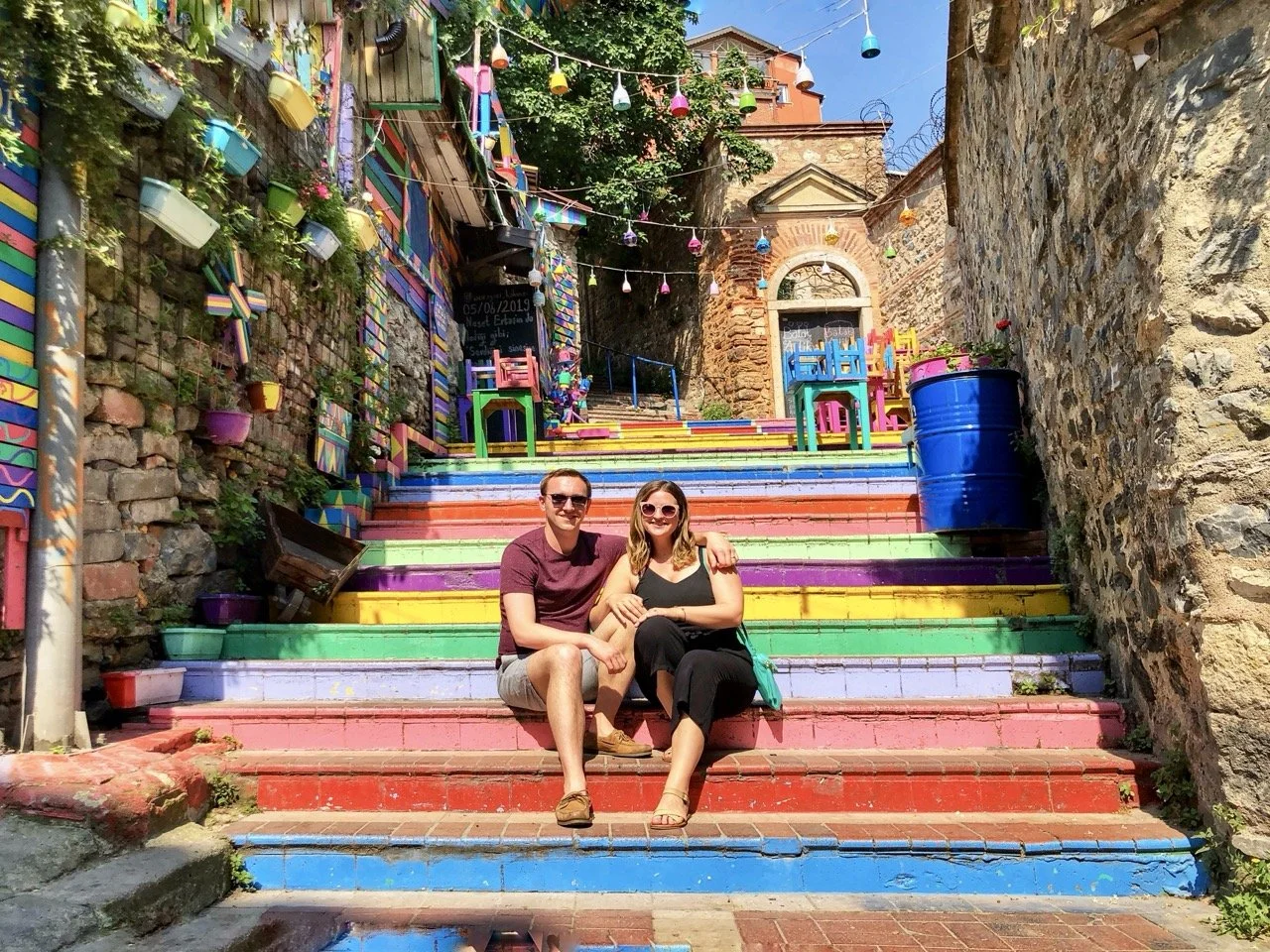
Bri and I soaking up the colours of the ‘Bul. Photo Credit: Christopher Mitchell
It also was a powerful teacher for me that connecting to the plight and struggles of others was actually a critical way to contextualize my own struggles. If these people could get up, one day after another, and face what was ahead of them, then why couldn’t I?
Now, it’s not as simple as that, of course. But my point is that when I put empathy at the forefront, and made it a priority to see myself as part of a global ecosystem, where every person was going to face their ups and downs, it made some of the issues that felt big, feel much smaller.
Did I really have a right to go red in the face over a taxi cab that zipped by me a little too closely when it was clear that, in the grand scheme, that was really nothing?
This is actually when I developed a mentality that if something set me off, I asked myself whether it would be something I would still be dealing with in a month from that moment. If it wasn’t, I tried not to waste the emotional energy, because that energy could be used to support and help others, which would, in itself, provide positive ripples.
Travel Taught Me Confidence
ADHD is interesting, and it’s something I’ve researched relentlessly over the last couple of decades. For one thing, it’s not all bad. For example, while a small task can sometimes feel paralyzing, large tasks that you’re actually interested in can get you into a flow state that the world’s top performers would do anything for.
That’s why, I’ve come to realize, that English class felt like ten minutes growing up, but math class felt like two hours.
Part of not just surviving with ADHD, but thriving, is understanding dichotomies like this.
Well, another dichotomy that’s something of a stereotype, but I do feel holds true, is that while the little things, the minutiae, can feel suffocating and larger than life, when there’s a moment of crisis, a lot of people with ADHD, including yours truly, can shine.
I learned that from travelling with Bri, where when we’d face a crisis, it was my time to step in and sort out the situation. I remember a particular instance in the early 2010s when Bri and I arrived at an airport in Europe (in fact, it was Istanbul, long before we called the city home), where we arrived at the airport to realize that the flights we’d bought via a third party aggregator…well, they didn’t exist.
Bri took a seat, and I went to work. I talked with anyone manning a desk for an airline about our options for about an hour, and before long was able to get a deal with KLM, to take us to Amsterdam for a very reasonable price. I recalled that our good friend was actually staying in Utrecht at the time, and had a place there, so instead of Greece, we were off to Utretch for 4 nights.
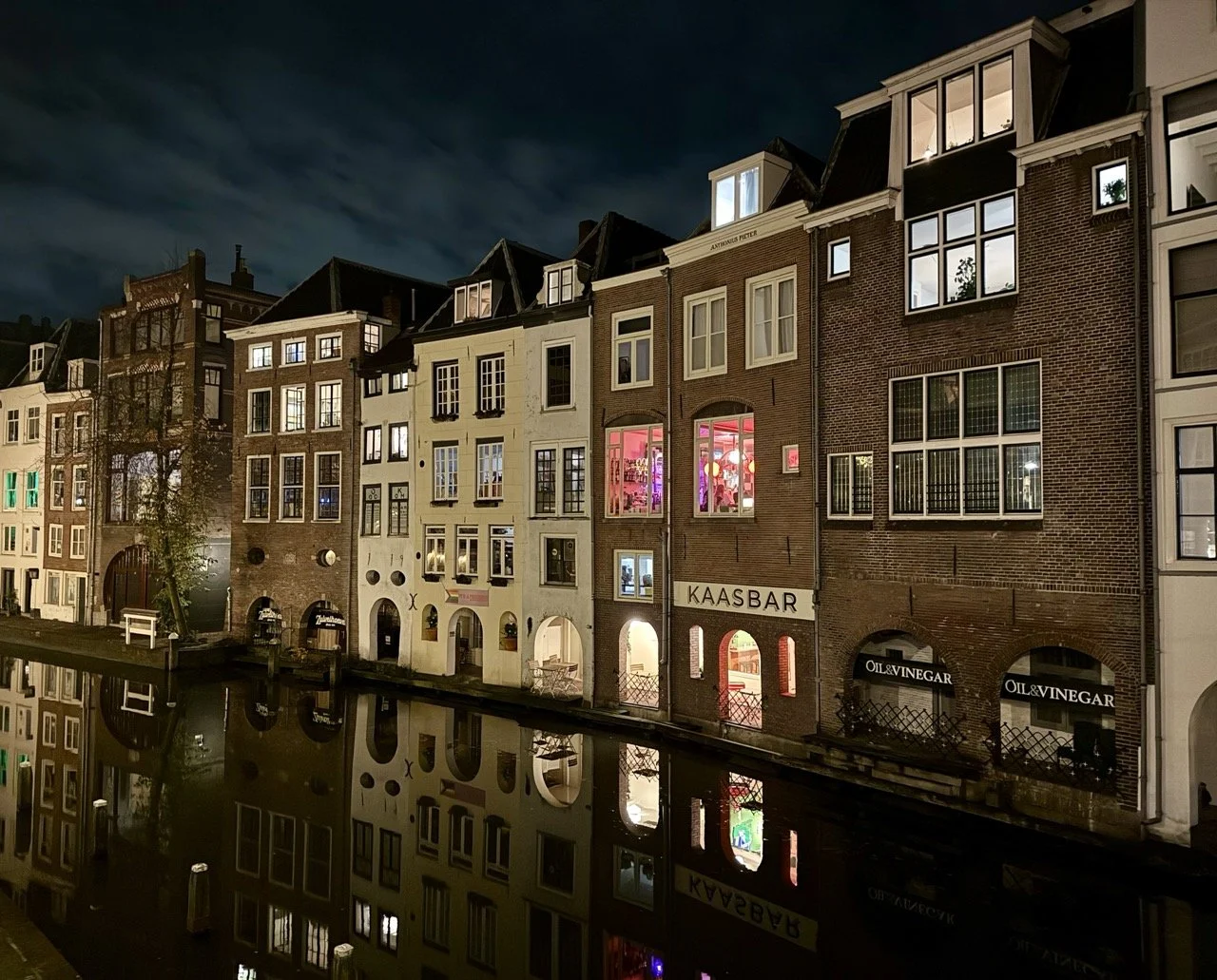
The canals of Utrecht. Photo Credit: Christopher MItchell
It worked out beautifully in the end, and I believe that’s because, in this rather bizarre way, uncertainty doesn’t frighten me in the regular way. Through my neurodivergent lens, I’ve always seen the arrival of any sense of chaos as opportunity.
It was travel that taught me that about myself. I came to realize that, when push came to shove, it was actually mundanity and strict routine that was what sincerely affected me, and so the counterpoint to this was that I was rather adept at embracing the unknown.
Upon further reflection, I wonder if that’s because there’s a sort of innate turbulence that comes with having a blend of ADHD and anxiety. Perhaps these moments when my full attention was required on the road was almost a relief, since giving my full attention to that issue fundamentally meant that I wouldn’t have that extra brain power to give strength or credence to an anxious thought pattern.
Now, I’m not saying that would be the same for everyone. Neurodivergence, by its very name, suggests that everyone relates to everything differently, but I’ve certainly heard this trend that, with ADHD, the small can become big, but the big can be manageable in the right circumstances.
Travel, without a doubt, empowered me to realize that I could see myself as a person who could not only handle the pressure, but thrive as a direct result of it.
I’ve always said that “I’d rather be busy, than bored” — and I wonder if that is in someway connected to some of these aforementioned thoughts as well.
Travel Taught Me How TO Heal
It was a December morning in 2011, when Bri and I were living in Korea, that I learned my best friend, Kiel, had passed away.
It sounds strange, but I don’t think I could have gotten through that period if I was waking up in the same room everyday, with the same thoughts, just a short walk from his house in Toronto — where I’d spent so much time.
I talked to my parents, and Kiel’s, about coming back to Toronto, and giving this life in Korea up. I remember everyone who knew me telling me to sit tight, because they could see the positive affect this had been having on my life.
I remember going into school to teach a class in the coming days, and one of my students, Angie, came up to me in the hall, without knowing anything about what was going on. She had folded me a little paper penguin, with the name Mr. Chris on it, and handed it to me.
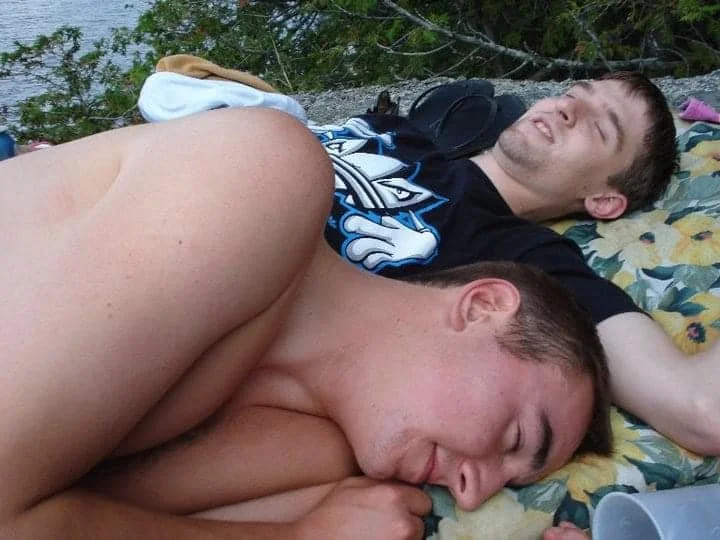

That’s when I decided that I was going to do this for both of us. That I was going to see this world that he would never have the chance to, and bring him with me in my heart.
It was a difficult period, there’s no point sugarcoating that. But it was the right choice. When Bri and I were in Southeast Asia after we left Korea, I had these long bus and train rides to listen to music (including Kiel’s music) and look out the window, and think. Time in transit can be annoying or boring, but it can also be reflective. I needed that time to put my head back on straight, and to sort through the myriad of memories we shared.
This whole idea of living for two, in a sense, of seeing the world, of being engaged, of not taking this opportunity I have on this planet for granted — it all comes back to losing Kiel.
I don’t think I’d be doing this for a living, quite honestly, if I hadn’t been forced to meditate on life and death like I had to during this period. If I hadn’t leaned into travel, into writing and reflection and honesty and vulnerability, I’m not sure if I could have gotten through it all.
For that, I’m grateful. It wasn’t a linear or conventional path of healing, but it was the right path for my brain, in that circumstance, I do believe.
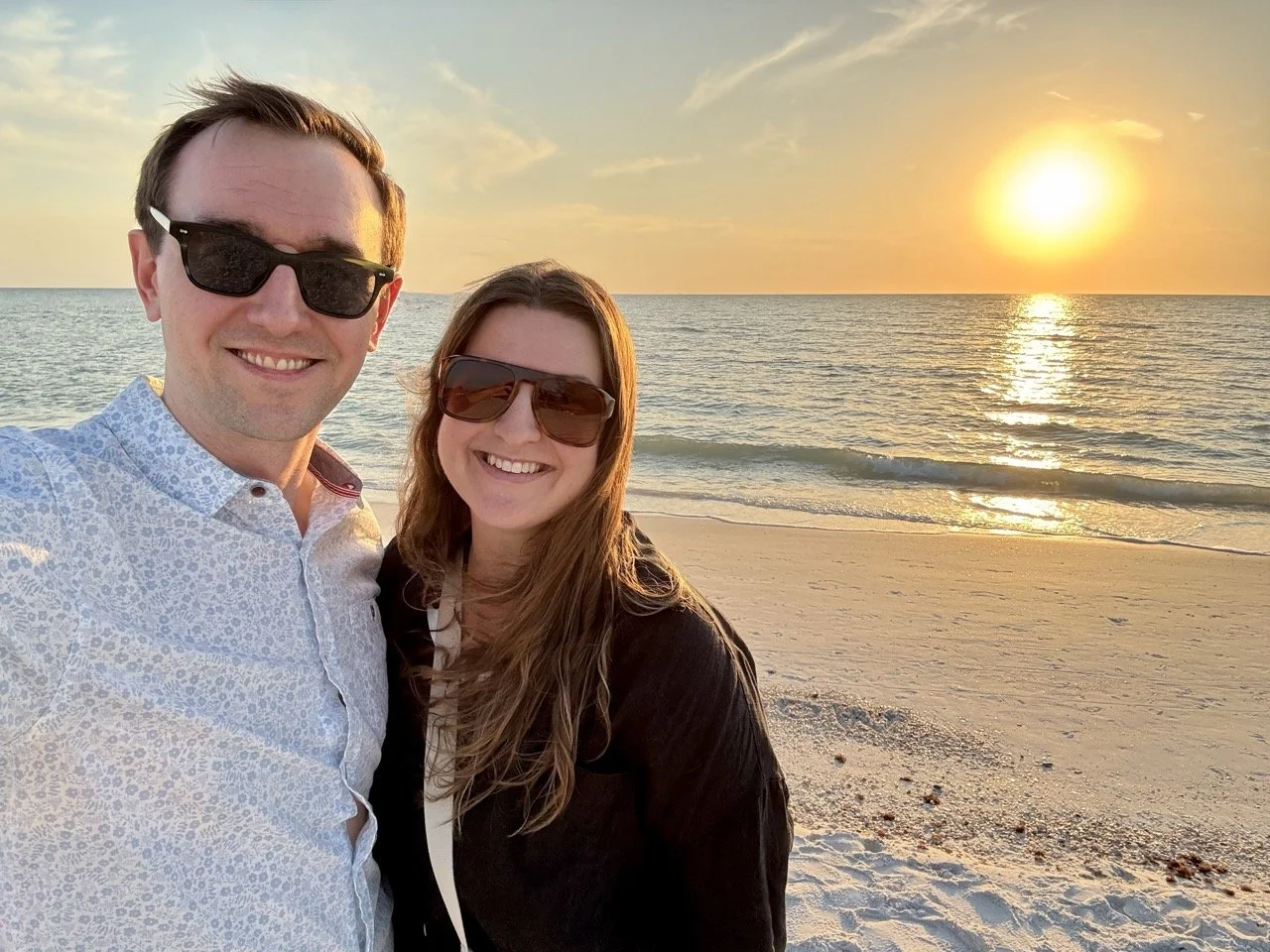
Bri and I on Anna Maria Island - 2025. Photo Credit: Christopher Mitchell
I sometimes like to think about my brain like a piece of hardware - a computer, for example. I know it’s powerful, but I also know that, at times, those fans are running a little loud, and I probably need to restart it.
Well, travel has always been an ideal way for me to reset — to restart that computer.
Sure, there can be stress before you head to the airport, but when you arrive somewhere, and you can feel that presence and that confidence, it can be like getting the software update that you never knew you needed.
My thesis here isn’t that travel solves all problems, because that would be quite an overstatement. It’s largely that, for me at least, travel gave me the context and the strength to better understand myself, which in turn helped me better understand the world. And then, for the most part, that’s been a loop that has continued.
I stopped avoiding displacement, and sought it out. I stopped pretending to have all the answers, and searched for them instead. I stopped trying to gather experiences, and instead let them wash over me, adding new colour to my palette.
Travel, for this neurodivergent being, was the university class I never knew I needed to take, and not because of all I learned about temples and bridges and museums and mountains, but because of what I was forced to learn about myself, and how I related to this world of ours.
In some very real ways, you could say that, it wasn’t until I was lost, that I truly found myself.